
New Report Offers a Blueprint to Move Interfaith Work Beyond Polite Chat
The report argues that interfaith work remains a powerful tool for social cohesion and pluralism—but only if organizers are willing to move past superficial politeness and confront the real barriers of systemic bias.
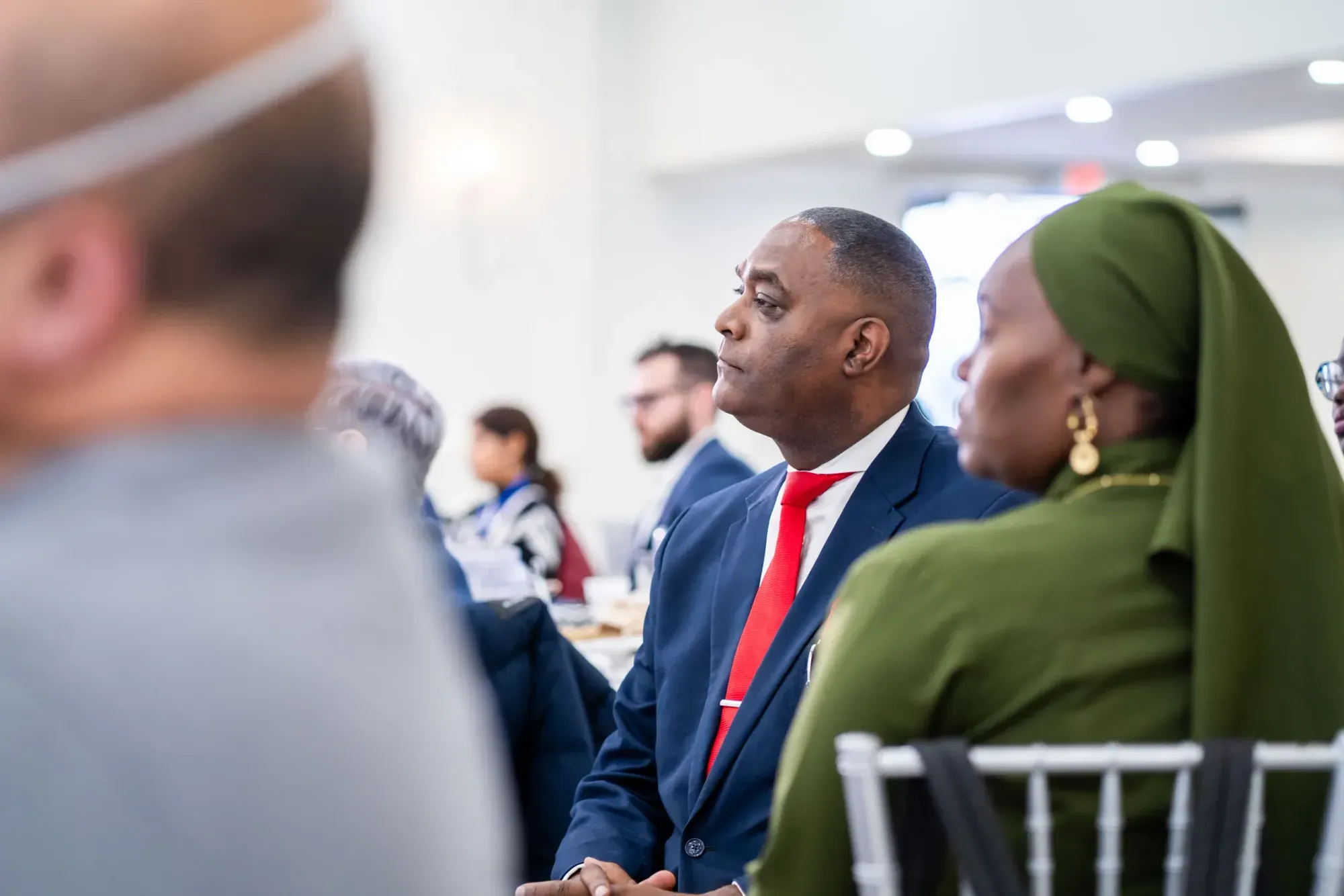
As communities navigate an increasingly fractured social climate, a new study by the Institute for Social Policy and Understanding (ISPU) serves as both a warning and a blueprint.
The report, “Bridges and Barriers: Interfaith engagement among American faith communities amid rising Islamophobia,” argues that interfaith work remains a powerful tool for social cohesion and pluralism—but only if organizers are willing to move past superficial politeness and confront the real barriers of systemic bias.
The analysis arrives on the heels of data from ISPU’s American Muslim Poll, which delivered a sobering finding: the endorsement of Islamophobic tropes among the broader public has risen sharply over the last few years.
Intended to explore how faith communities might heal these social and political divides, the Bridges and Barriers study reveals that while grassroots interfaith work is happening, it faces unprecedented structural friction.
The Paradox of Rising Bias
The most striking revelation in the report is what researchers call a paradox in the data. Despite concentrated efforts by various multi-faith organizations to build relationships across communities, anti-Muslim sentiment has spiked precisely within mainstream religious groups.
ISPU’s Islamophobia Index shows that between 2022 and 2025, the sharpest increases in anti-Muslim attitudes were recorded among white Evangelicals, Catholics, and Jewish Americans.
This trend demonstrates that anti-Muslim bias is no longer confined to isolated extremist groups.
Instead, it has grown within mainstream religious populations, even as subset groups within those same communities actively engage in interfaith work.
The report points to significant "perception gaps" as a major hurdle.
There remains a massive disparity between what everyday Americans imagine neighbors of other faiths believe and what those neighbors actually hold to be true.
The Breakdown: Who is at the Table?
According to ISPU’s data, American Muslims and white Evangelicals report some of the highest baseline levels of interfaith involvement compared to the general public.
The demographics of who participates in these spaces defy common assumptions about gender and age:
- Gender Balance: For both Muslims and white Evangelicals, men and women participate at virtually identical rates. Nineteen percent of Muslim men and 14% of Muslim women reported interfaith involvement, alongside 21% of white Evangelical men and 19% of white Evangelical women.
- The Youth Factor: While younger demographics are often perceived as less religiously involved, young Muslims are participating in interfaith dialogue at the same rate as their elders. Seventeen percent of Muslims aged 18–29 reported regular interfaith involvement, compared to 16% of those aged 30–49 and 19% of those aged 50 and older. By contrast, only 4% of the general public aged 18–29 reported similar involvement.
Moving Beyond ‘Polite Civility’
The findings suggest that traditional interfaith efforts—which often prioritize casual dialogue, shared holiday meals, or basic networking—may not be robust enough to dismantle deep-seated political and social prejudices.
To bridge these gaps, organizations like the Shoulder to Shoulder Campaign argue that interfaith initiatives must be conducted more thoughtfully and purposefully.
True solidarity requires groups to move away from proselytizing and actively work internally to unlearn discriminatory ideologies about Muslims and other marginalized groups.
Furthermore, because the American Muslim community is itself highly diverse, the report notes a missed opportunity for "intra-community" and cross-cultural interfaith initiatives, such as intentional programming connecting Black Christian and Black Muslim communities to explore their shared histories and distinct challenges.
Recommendations for the Path Forward
To transform interfaith spaces from simple networking events into real shields against bigotry, the ISPU report outlines several key recommendations for community leaders and organizers:
- Account for Diverse Motivations: Design engagement initiatives that acknowledge participants come to the table with vastly different expectations and theological boundaries.
- Unpack Core Meanings: Dedicate early sessions to aligning on shared social values and taking the time to explicitly define terms, rather than assuming universal understanding.
- Build Trust Under Tension: Pivot toward more deliberate frameworks—such as building "mutual trust under tension"—which prepare participants to handle difficult political or theological disagreements without breaking the relationship.
- Focus on Shared Action: Move past basic dialogue toward tangible, collaborative problem-solving. This includes joint community service projects, shared public statements on local issues, and visible, active public solidarity when a minority community faces discrimination.