
Muslim Workers in Toronto Region Earn $12,000 Less Than Non-Muslim Peers, York University Study Finds
Islamophobia costs GTHA Muslim community an estimated $1.2 billion in lost wages annually, new research reveals
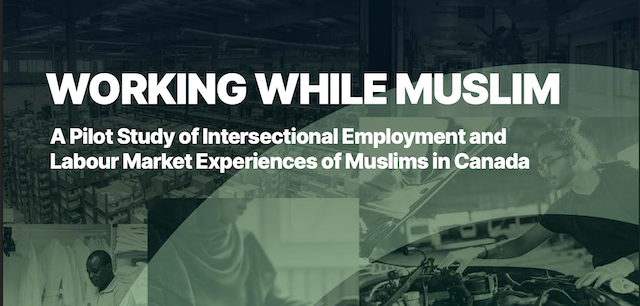
A landmark study from York University has found that Muslim workers in the Greater Toronto and Hamilton Area earn significantly less than their non-Muslim counterparts, face higher rates of workplace discrimination, and are routinely denied religious accommodations — findings researchers say point to the deep entrenchment of Islamophobia in Canada's labour market.
The report, Working While Muslim: A Pilot Study of Intersectional Employment and Labour Market Experiences of Muslims in Canada, was released this week by York University's Islamophobia Research Hub. It draws on data from the 2021 Canadian Census and an original survey of 423 self-identifying Muslim workers across the GTHA conducted in 2025.
A $12,000 Wage Gap
The study's most striking finding is a persistent and substantial Muslim wage gap. Full-time, full-year Muslim workers of prime working age earned a median employment income of $61,000, compared to $73,000 for comparable non-Muslim workers — a gap of $12,000 per year.
The disparity is even sharper when race and gender intersect. Visible minority Muslim women working full-time and full-year earned just 64 cents for every dollar earned by white non-Muslim men. Aggregated across the community, researchers calculate that Muslim workers and their families lose a combined $1.2 billion in income annually as a result of this wage gap.
"These are not marginal differences," said study co-author Dr. Salmaan Khan, a postdoctoral research fellow at the Islamophobia Research Hub. "They reflect structural patterns of exclusion that are costing Muslim families — and the broader economy — enormously."
Higher Unemployment, Lower Wealth
The wage gap sits within a broader picture of economic disadvantage. The unemployment rate for prime-age Muslim workers between 25 and 54 was 16.4%, compared to 10.2% for non-Muslims in the same age group.
Muslim households are also less likely to reach higher income brackets. Only 45% of Muslim households reported total household income at or above $110,000, versus 56% of non-Muslim households. Meanwhile, 17% of visible minority Muslims and 18% of non-visible minority Muslims fall below the low-income threshold — compared to 8% of the white non-Muslim population.
The report also flags a stark housing divide. A disproportionate share of Muslims in the GTHA live in rented dwellings, with a measurable proportion in subsidized housing — patterns the researchers link to lower income accumulation and limited access to capital.
Discrimination Is Widespread
Beyond the numbers, the study paints a detailed picture of what Muslim workers experience day to day. One in four Muslims surveyed — approximately 26% — reported experiencing discrimination or prejudicial treatment while working. A similar proportion, 26.7%, said they had experienced verbal or physical violence or harassment in the workplace.
More than half of respondents, 56%, said they had sometimes or frequently felt isolated or excluded at work. About one in five, 20.5%, believed they were treated differently than non-Muslim colleagues.
Religious accommodation — a legal obligation under Ontario's Human Rights Code — was another area of significant concern. More than half of Muslim workers surveyed, 52%, said their religious practices had not been adequately accommodated at work. The most commonly cited barriers were a lack of clear workplace policy for requesting accommodations, and fear of being judged or treated differently for making such a request, each cited by 28% of respondents.
Barriers Begin at the Job Interview
The discrimination Muslim workers face does not begin after they are hired. The study found that approximately one in five Muslims had been asked about their religious identity or practices during a job interview — a practice that may contravene human rights law. Among those who reported such questioning, 45% were asked about their religious practices directly, 28% were asked about their ability to fit into workplace culture, 25% were asked about their political beliefs, and 18% were asked about their ability to travel for work.
A "Colour-Coded" Labour Market
The researchers situate their findings within what they describe as a racially segmented, "colour-coded" Canadian labour market — one in which disparities based on race, gender, and immigration status compound one another. Muslims in the GTHA are disproportionately represented in lower-wage sectors including retail trade, transportation and warehousing, and accommodation and food services, and are underrepresented in higher-paying fields relative to their educational qualifications.
That credential-experience mismatch is notable given how highly educated the Muslim community in the GTHA is: 51% of Muslims aged 25 to 64 hold post-secondary degrees — a higher rate than among non-Muslims. Yet their incomes and employment rates lag significantly behind.
The study's intersectional analysis found that Black Muslims faced a particularly compounded set of barriers, experiencing the combined effects of anti-Black racism and Islamophobia in ways that produced distinct patterns of disadvantage relative to the broader Muslim community, the Black community, and the general Canadian population.
Calls for Action at Every Level of Government
The report concludes with a set of policy blueprints directed at municipal, provincial, and federal governments.
At the provincial level, researchers call for reforms to the Ontario Employment Standards Act to address wage fairness, and point to chronic underfunding at the Ontario Human Rights Commission and Tribunal as a structural barrier to addressing discrimination. They also flag the low unionization rate among Muslim workers as an area requiring attention under the Ontario Labour Relations Act.
At the federal level, the study highlights a significant data gap: Statistics Canada's monthly Labour Force Survey — the country's primary source of employment data — does not collect information on religious affiliation, making it impossible to monitor Muslim workers' outcomes systematically. The researchers call for that to change, and for the development of a national action plan on Islamophobia and employment.
Reforms to the foreign credential recognition system are also called for, given that a majority of GTHA Muslims — 69% — were born outside Canada.
Context and Funding
The study was funded by the Office of the Special Representative on Combatting Islamophobia, The Muslim Fund, and individual donors. It was conducted in partnership with the Institute for Social Research at York University and distributed through Léger Opinion. Community organizations including the National Council of Canadian Muslims, the Canadian Council of Muslim Women, and the Workers' Action Centre contributed to the study's design.
Researchers describe the work as a pilot study and call for a larger national study to build on these findings.
Muslims make up 9.4% of the GTHA population — a share that is growing. With nearly 40% of the community under the age of 25, researchers warn that without meaningful intervention, the barriers documented in this report will continue to shape the economic futures of the next generation.
The full report, Working While Muslim, is available through the Islamophobia Research Hub at York University.
The Islamophobia Research Hub is based at the York Centre for Asian Research at York University in Toronto.