
In Memoriam: A Tribute to Abdirazak Karod
In loving memory. A Tribute to Abdirazak Karod, Executive Director, Somali Centre for Family Community Builder | Mentor | Elder
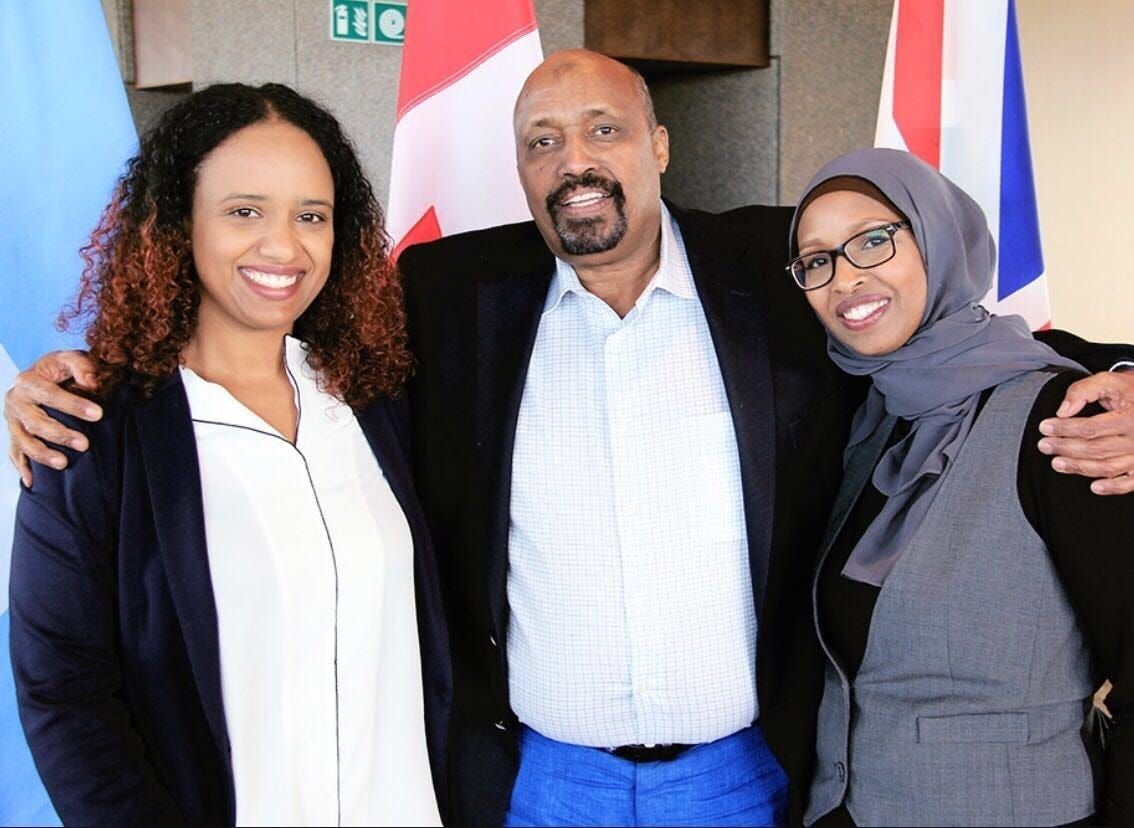
By Farhia Ahmed
Inna lillahi wa inna ilayhi raji'un - To Allah (the Source of Peace) we belong, and to Allah (the Source of Peace) we return.
Abdirazak Karod, Executive Director of the Somali Centre for Family Service was called home by his Lord on June 4, 2026.
I have been in shock since Thursday, trying to hold myself together since learning of the passing of this giant in our city.
On June 6, 2026, I sat down to finally acknowledge what had happened. Putting the pieces together through my reflection that morning, it hit me that Abdirizak Karod has been a part of my life and support system long before I actually met him.
I had no idea when I first met him in my 20’s, that moment was part of an already established relationship I had with him, one that I am now realizing was a decades-long Leadership Master Class.
The Weight of a Name
I begin with his name, because names carry prophecy.
Abdirazak is an Arabic name meaning “Servant of the Provider.” Abd, servant, or one who is devoted. Razak, Al-Razzaq, one of the 99 names of God, meaning the Sustainer, the Provider, the One who supplies all that is needed.
In Islamic tradition, a name is not simply a label. It is a covenant. A direction. A prayer whispered over a child before they understand language.
Abdirazak Karod spent his entire life making good on his. He was a servant. And he provided sustenance for the hungry, direction for the lost, dignity for the displaced, and a door that was always, always open.
He did not just carry his name. He earned it, every single day.
Leadership Master Class
I have been blessed in my life with incredible mentors who have appeared along my leadership journey. But my first true mentor was Abdirazak Karod.
I first met him when I was a university student.
It was the early 2000s, just after 9/11.
Muslim youth were in crisis. A friend volunteering at the Somali Centre asked me to join her for a brainstorming session on building a new support program.
She promised pizza, so I was down.
We arrived at the Somali Centre. “Welcome, welcome! Make yourself at home.”
Abdirazak greeted us and showed us to the boardroom, where a full buffet of pizza, drinks, and snacks was already laid out.
Others arrived and settled in. He stepped away to take a call.
We were fully engaged in our glutinous enjoyment when this loud, quirky uncle voice startled us.
He is standing in the doorway.
“Hey, hey — listen up. Listen, guys. Our centre is getting toooo many calls from the community. Our youth are being called terrorists every day. Their dreams are being crushed by employers who suddenly don’t trust them. Muslim youth are under suspicion everywhere.” He paused with a deep breath. “They need encouragement. They need comfort. They need our help. You are among the brightest and most creative in our community, and I need YOUR help. I am an old man. I don’t speak your young language. I am gonna leave you the keys. I trust you. Tell me how I can help make your ideas real. Hodan, will send me a summary in the morning.”
And then he left the room.
An enabler. Trust. Clear direction. Delegation. Inclusion. Passion. A pure heart and a call to action. This is what he taught me. This is what my leadership principles are anchored in today.
Karod [as we lovingly called him] never pretended to have all the answers.
He never waited for someone else to lead when he knew he could help.
He didn’t wait for funding to act when the resources could be created simply by bringing people together.
This is something he had been doing since the day he first set foot in Ottawa.
The Somali Centre for Family Service
Following the civil war in the late 80s, the Somali diaspora in Ottawa was growing.
“Between 1988 and 1996, more than 55,000 Somali refugees arrived in Canada – more than 7,000 resettled in the National Capital Region. This historic migration represented the largest group of Black immigrants to arrive in Canada in such a short time. The Somali Centre for Family Services was established in 1991 to help preserve the culture and heritage of Somali newcomers to Canada and to address the community’s pressing need for culturally appropriate settlement, integration and counselling services. Source A Story of Diversity and Inclusion - Somali Centre for Family Services
During this same period, the Black community in Ottawa was already navigating a white supremacist stronghold in Ottawa, and the sudden influx of a large population of Black newcomers made things harder.
But there was one distinction with this newer group. They were also Muslim. They were different, and this difference unleashed a particular kind of hate.
In those days, I had grown used to being called the N-word. But it was around this time that I learned a new variation of it: Sand N, a racial slur usually used on Arabs.
At that time, the Muslim population in Ottawa was still in its infancy — predominantly Arab or Indo-Pakistani in heritage.
New to the country, English was a barrier that made it hard for the Somali community to access healthcare, navigate the justice system, or advocate for themselves in schools.
Having grown up in Ottawa with English as my fluent tongue, I found myself, as a fifth grader, carrying the unofficial duty of school translator for the principal, the administration, teachers, and parents alike.
No one asked my parents whether this was appropriate.
No one asked me if I was okay.
But little did I know that someone had just arrived and would soon bring me relief; I didn’t even know how to articulate.
I was not the only one who quietly needed relief.
Before there was a centre, there was a man who saw a need and refused to look away.
Abdirazak Karod built the Somali Centre for Family Services from nothing. Just the will, and no pride in the way of asking for help. And he did it.
First, as a one-man show, his first service offering was translation services.
30 years later, a full-time team of 20, an executive board of 9, hundreds of volunteers, and a network of thousands.
For more than three decades, the Somali Centre has remained the first door that countless immigrants and refugees walk through when they arrive in Ottawa.
He did not wait for a system to welcome them. He built one himself.
Within two years of his arrival in Ottawa, Abdirazak stood up what would become a beacon of hope for people of all walks of life, a gathering place for anyone with an initiative to make Ottawa a better, kinder city.
In July 2016, our Community was in need of just that, a place to gather, mourn and take initiative.
The Justice for Abdirahman (JFA) Coalition, a group formed by community members following the death of Abdirahman Abdi, would not have succeeded in its efforts to obtain greater transparency, challenge racial inequity, increase support for mental health needs and bring positive change to law enforcement institutions.
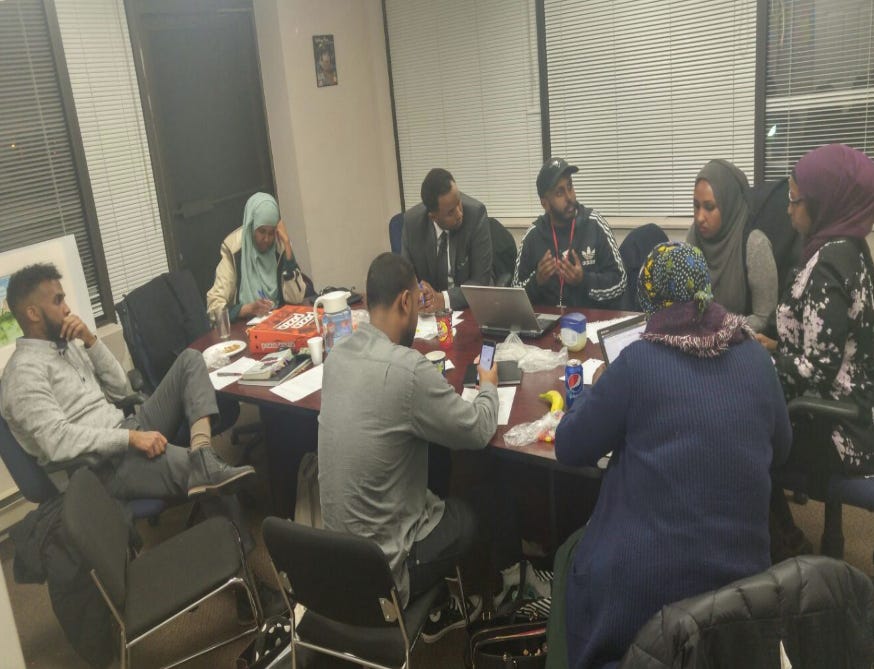
Somali Centre became our home base for this work. Between 2016 and 2020, the Coalition basically lived in one of Abdirazak’s boardrooms.
A Legendary Journey Home
Abdirazak Karod was returning from a once-in-a-lifetime trip.
He had just completed Hajj, the annual Islamic pilgrimage to the holy city of Mecca.
Every Muslim who is physically and financially able is called to make this pilgrimage at least once in their lifetime.
It holds immense spiritual, historical, and communal significance.
A sincerely performed Hajj is one grounded in deep self-reflection, patience, and repentance, believed to wipe away all previous wrongdoings and allow a believer to return home spiritually reborn.
For these reasons, preparation for this trip is extensive, but the most significant part involves reaching out to anyone you have ever wronged and, in the most sincere manner possible, asking them for their forgiveness.
That is why so many believe that death after this trip is the best transition to our spiritual afterlife.
But to understand what Hajj truly is, and why this part of Abdirazak’s story matters, you have to go back. Faaaar back.
The Ka’ba, the cuboid structure at the heart of the Grand Mosque in Mecca, the focal point toward which Muslims around the world turn in prayer five times a day, is believed by Muslims to have been first built by Adam, the first prophet of mankind.
It is understood as the original meeting place between the human and the divine. Centuries later, the Prophet Abraham and his son Ishmael were called back to rebuild it, before the final Messenger, Prophet Muhammad, would pass the torch to all of mankind, keeping the tradition alive.
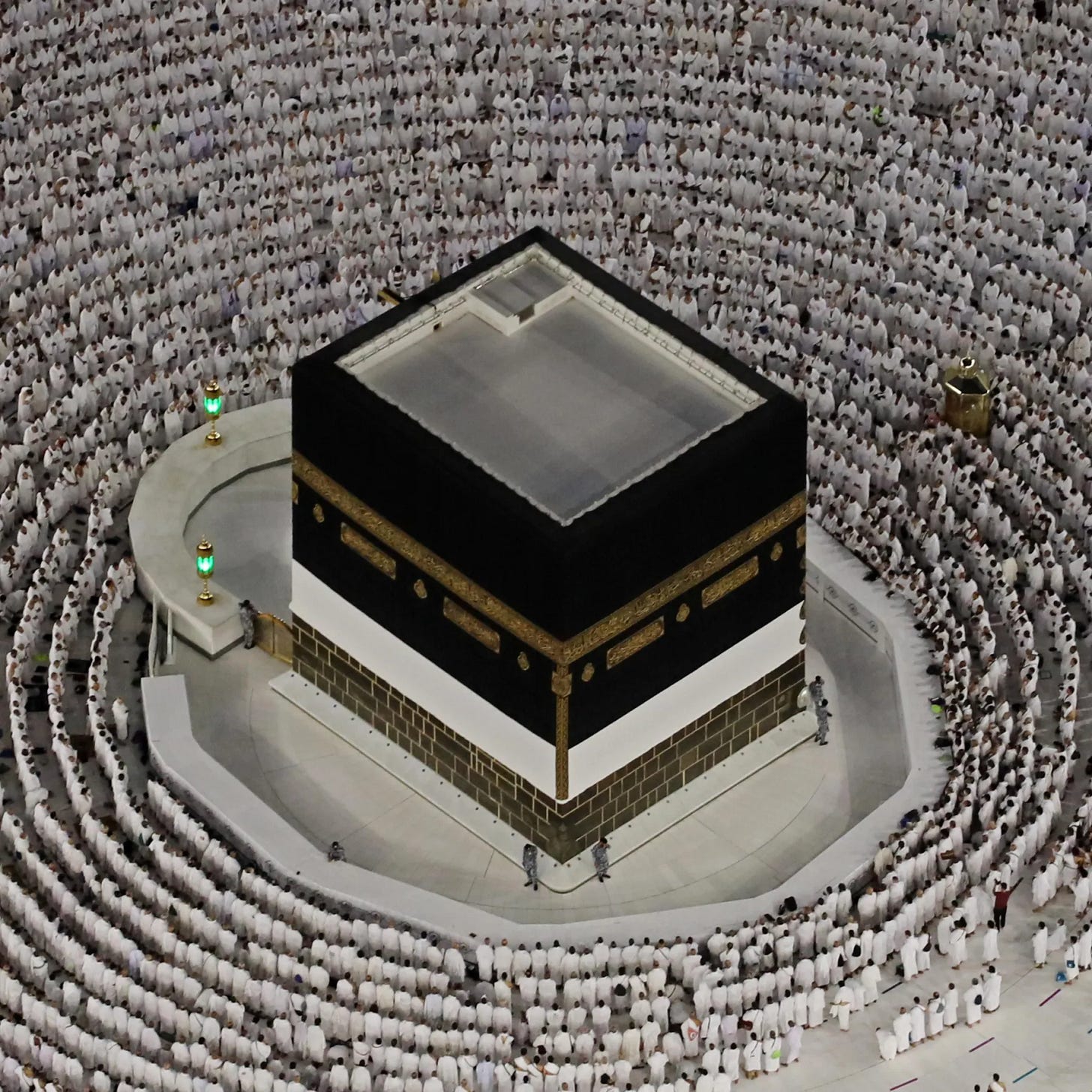
In his final days, this is the ground Abdirazak walked. The same ground where Abraham stood.
The same ground where Ishmael grew up, in the region the Bible calls the Desert of Paran, mentioned in Genesis 21:21.
In the Old Testament, Psalm 84:6 describes it as the “Valley of Baca.” This is not a site claimed by a single tradition.
It is ancient ground, layered with the prayers of prophets recognized across the Abrahamic faiths: Judaism, Christianity, and Islam.
Hajj is a convergence. Every year, millions of people from every nation, every language, every skin tone dress in identical simple white garments and come together. No rank. No status. No tribe.
In those white garments, a king and a refugee are indistinguishable. Everyone stands equal before the Almighty.
It was this radical, embodied equality that stopped Malcolm X in his tracks.
One of the most formidable voices in the history of Black liberation, a man who had preached the deep and structural separateness of the races, wrote home from Mecca in April 1964 utterly transformed:
“Never have I witnessed such sincere hospitality and the overwhelming spirit of true brotherhood as practiced by people of all colors and races here in this Ancient Holy Land.” — Malcolm X, Letter from Mecca, April 20, 1964 (You can read his full letter here).
Abdirazak already knew what Malcolm X discovered. That there is no hierarchy of human beings, only a hierarchy of deeds and service.
Honour Upon Honour: The Sacred Status of the Traveller
In Islamic tradition, the traveller holds a special and merciful status.
They carry a particular closeness to the spiritual dimension and to God. Their prayers carry extra weight. Their souls are held with extra care.
In our tradition, you are a traveller until you have fully returned home.
Your journey does not end at the airport or at the entrance of your city. It ends when you are home, truly home.
He had not yet fully returned home. His suitcase had not been unpacked.
Abdirazak Karod took his last breath at his doorway, between trips to his car.
His Hajj was not a revelation to him.
It was a confirmation, the final seal on a life already lived in full devotion. His last breath as a traveller was not an ending.
It was a gift from God before his true homecoming.
What He Left Behind
Abdirazak Karod planted seeds in this city that are still growing. In the organizations he built, In the youth he entrusted with the keys before they trusted themselves.
In the immigrants who found their footing because his door was the first one they ever walked through in Ottawa.
In the leaders who, decades later, are still governed by the principles they absorbed standing in his boardroom, eating his pizza, listening to his voice cut through the room with love and urgency and absolute confidence that we were equal to the moment.
He received the 2024 Black History Ottawa Community Builder Award for his decades of volunteer service with the Children’s Aid Society of Ottawa, the Community Foundation of Ottawa, the Asunnah Muslim Association of Ottawa, and so many others.
The award named what the community already knew: he was a builder. Not of buildings, but of people. Of capacity.
Of the invisible infrastructure that holds a city’s most vulnerable residents together when systems fail them.
He did not wait for someone else to lead. He did not wait for funding to act.
He did not wait for the world to be ready for his open heart.
He simply opened it and held the door for everyone who followed.
He is gone from us as travellers sometimes are, ahead on the road, out of sight, but has left markers along the way so we know which direction to walk.
May Allah grant him the highest stations of Jannah.
May his family be held in the warmth of every life he touched.
May his name — Abdirazak, Servant of the Provider be remembered in this city for exactly what he was.
Al-Fatiha.
Written in grief, gratitude, and love.
Rest well, Adeer [uncle]. The keys you left us are still in good hands.