
Lives Lived: Remembering Dr. John L. Esposito, a Lifelong Bridge Builder
The best way to honour his memory is to continue his mission: to approach others with curiosity rather than fear, to insist on facts over prejudice, and to recognize our shared humanity across lines of faith and culture.
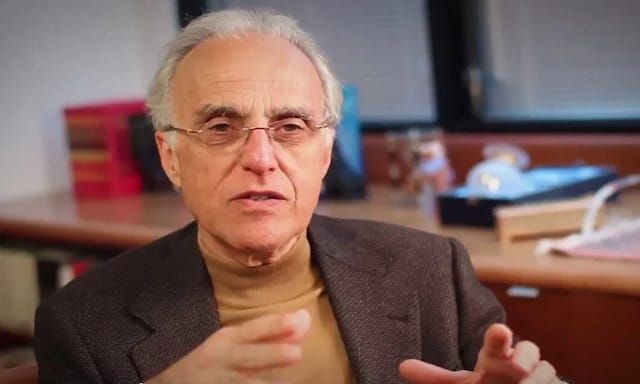
Dr. John L. Esposito spent more than five decades building bridges. The pioneering American scholar of Islam and international affairs passed away on July 15, 2026, at the age of 86, leaving behind a legacy of interfaith dialogue, religious literacy, and rigorous academic advocacy. For those in community-building and civil society spaces, Dr. Esposito was not just an academic giant; he was a trusted ally and a voice of clarity when public discourse was dominated by fear and misinformation.
From Brooklyn to Georgetown
Born in Brooklyn, New York, in 1940, Esposito’s journey into the heart of Islamic studies was unusual for his time. He was a practicing Roman Catholic who originally trained in Catholic theology. During his doctoral studies, he came under the mentorship of the renowned Palestinian-American thinker Dr. Isma’il Raji al-Faruqi. This relationship shaped Esposito's approach to the Muslim world, teaching him to present Islam on its own terms rather than through the lens of Western anxieties.
After teaching world religions at the College of the Holy Cross in Massachusetts for nearly two decades, Esposito joined the faculty of Georgetown University in 1993. There, he founded the Center for Muslim-Christian Understanding (now the Prince Alwaleed bin Talal Center), which grew into one of the world's premier hubs for interfaith cooperation. Later, he established the Bridge Initiative, a vital research project dedicated to tracking and dismantling systemic Islamophobia.
Presenting Facts Over Fear
Esposito’s scholarly output was monumental, comprising over 50 books that became standard texts globally. In works like Islam: The Straight Path and The Islamic Threat: Myth or Reality?, he translated complex theological and geopolitical dynamics into accessible language for readers, journalists, and policymakers alike.
Perhaps his most groundbreaking contribution was the 2007 book Who Speaks for Islam? What a Billion Muslims Really Think, co-authored with analyst Dalia Mogahed. Based on more than 50,000 interviews across 35 Muslim-majority nations, the study was the most comprehensive poll of its kind. At a time when the post-9/11 landscape was thick with sweeping generalizations, Esposito brought empirical data to the table, showing that the hopes, anxieties, and aspirations of ordinary Muslims were deeply human and vastly different from popular media caricatures.
For Esposito, "getting to know one another" was not an optional academic exercise but a moral imperative. He frequently pointed out that his deep Catholic faith did not restrict his love for other traditions; rather, it was the very anchor that enabled him to respect and defend the dignity of others.
Global Reactions and Tributes
Following news of his passing, tributes poured in from community leaders, civil rights organizations, and international statesmen, reflecting his global reach.
- Malaysian Prime Minister Anwar Ibrahim expressed deep grief, noting that his friendship with Esposito stretched back more than five decades to the early 1970s. Anwar described him as "a true friend of the Islamic world" who built the intellectual foundations for a deeper Western understanding of Islam, particularly in the difficult years following the September 11 attacks.
- Sami Al-Arian, director of the Center for Islam and Global Affairs, recalled Esposito's personal loyalty, noting that the professor repeatedly visited him during his years under house arrest in the United States. He described him as a scholar who "built bridges in an age of walls."
- The Council on American-Islamic Relations (CAIR), through National Executive Director Nihad Awad, mourned the loss of a "compassionate friend and trusted voice" who devoted his life to advancing an accurate understanding of Islam "at a time when misinformation and prejudice too often dominated public discourse."
Moving Forward in His Footsteps
As we reflect on Dr. Esposito’s extraordinary life, we are reminded that the work of cross-cultural understanding is never truly finished. The bridges he built require constant maintenance, and the walls he sought to tear down still threaten to divide us.
The best way to honour his memory is to continue his mission: to approach others with curiosity rather than fear, to insist on facts over prejudice, and to recognize our shared humanity across lines of faith and culture.
Sources
- Al Jazeera English: "John Esposito, pioneering scholar of Islam in the US, dies aged 86" (Published July 16, 2026).
- Georgetown University / The Bridge Initiative archives and institutional announcements.
- Public statements and official social media tributes from Prime Minister Anwar Ibrahim, Dr. Sami Al-Arian, and the Council on American-Islamic Relations (CAIR).