
When Everything Is Connected, Everything Feels Fragile
Leaders were unanimous on one point: 'cyberattacks on businesses and critical infrastructure will be constant, increasingly sophisticated and highly disruptive over the next 18 months.' So how do we keep our hearts from fracturing every time a screen goes dark?
By Muneeb Nasir
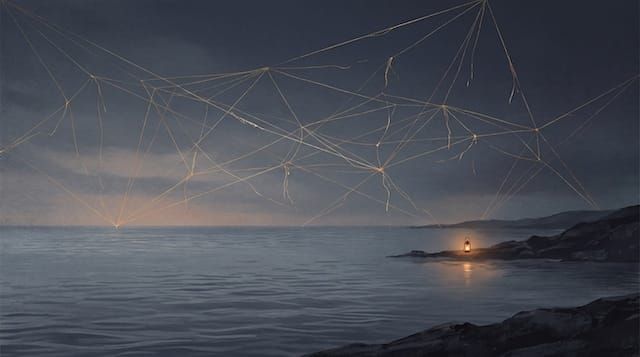
Something has shifted in the way many of us live. The ground feels less solid than it used to.
We depend on systems we cannot see and do not fully understand, and when they stumble, the effects reach us in minutes. A technical breakdown here, a sudden collapse of trust there: the details change, but the feeling stays the same.
Everything feels fragile when everything is connected.
The shocks will keep coming. Today it is a software failure, tomorrow an energy bottleneck or a supply chain freeze. The nature of the crisis will change. The speed at which it reaches us will not slow down.
That is more than a feeling. Axios recently reported on conversations with more than 50 leaders in government, AI, business and cybersecurity.
Writing in their "Behind the Curtain" column, Jim VandeHei and Mike Allen say the leaders were unanimous on one point: cyberattacks on businesses and critical infrastructure will be constant, increasingly sophisticated and highly disruptive over the next 18 months.
These leaders describe 2027 as the year cyber becomes "like weather." Outages will be frequent, disruptive and occasionally scary, something people and companies must learn to navigate daily. The chances of widespread disruption or real damage, they warn, are rising fast.
We cannot stop the weather. We can only prepare for it, and face it together.
There is a quieter cost that no repair crew can fix. Each disruption may be patched within hours, but the unease lingers. When one shaky system follows another, the mind draws a conclusion: nothing is truly safe, and nothing is in my control.
That feeling is exhausting. We check our phones for the next alarm. We scroll the headlines and brace ourselves. We carry a sense of dread through the day, and for many people it deepens into something heavier: a sense that the world is too big and too complicated to be fixed, and that nothing we do can matter. Hopelessness grows exactly where we feel powerless.
The Qur'an names this experience plainly. Believers will be tested with fear and loss, and good news is promised to the steadfast (2:155).
Modern life tempts us to confuse efficiency with control. When planes leave on schedule and messages cross oceans in a blink, it is easy to forget how dependent we are.
The Qur'an speaks to this tendency through the imagery of the sea, the highway of the ancient world. God reminds us of the ships "sailing like floating mountains", and that if He willed, He could still the wind and leave them motionless on the water (42:32–33). Today's floating mountains are our cloud servers and commercial jets. When the digital wind stops, they sit still.
The Qur'an also says that earlier communities were struck with hardship "so that they could learn humility" (6:42). Hardship, in other words, is meant to wake us up, not to make us panic. Our technology is a blessing on loan, never a guarantee.
So how do we keep our hearts from fracturing every time a screen goes dark?
The Prophet Muhammad, peace be upon him, offers a model of steadiness. A narration reports that when a lamp in his home went out, he said, "We belong to God and to Him we shall return" (2:156). Asked why he said it over something so small, he replied that whatever troubles a believer is a reminder to turn back to God.
He also told his companions to "be in this world as a stranger or a passer-by". A traveller expects delays. Roads wash out and schedules change, but he does not mistake the journey for home.
The Qur'an praises believers whom neither commerce nor profit distracts from remembering God (24:37). When our anchor is God and not the grid, an outage disrupts our schedules, not our souls.
Despair is the one response the Qur'an rules out. It tells even those who have wronged themselves not to lose hope in God's mercy (39:53), and it promises that hardship is accompanied by ease (94:5–6).
This is not a call to retreat from modern life. It is a call to build stronger foundations inside it.
Systems fail. Neighbours carry one another through the crisis.
The Qur'anic chapter, Surah Al-Asr names four anchors that keep us from loss: faith, good deeds, urging one another to truth, and urging one another to patience. Notice that the last two are shared. Patience is not meant to be carried alone.
When flights are cancelled and the tools go offline, what saves a community is not a faster app. It is local trust, neighbours checking on elders, and institutions built on service rather than speed.
The next shock will come, and we cannot control when. But we can choose whether we meet it in anxious isolation, or as a grounded, compassionate community that knows where real security lies.
"By the declining day, man is [deep] in loss, except for those who believe, do good deeds, urge one another to the truth, and urge one another to steadfastness." — Qur'an, Surah Al-Asr (103:1–3)