
The Rising Need for Security in Ramadan 2026
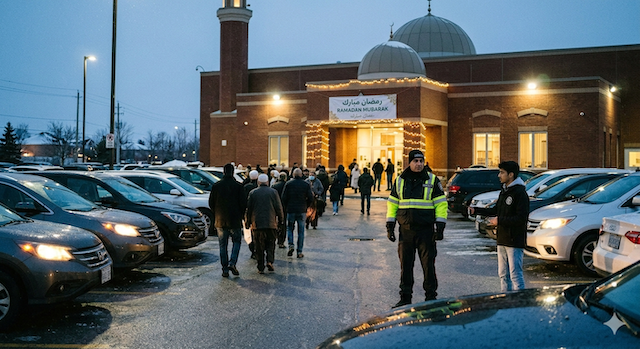
There are two dominant, yet contrasting, themes define the landscape of Canadian mosques this year: overflowing parking lots and increased security presence.
For the nearly 1.8 million Muslims across Canada, the arrival of Ramadan has brought a welcome change: the first full "winter Ramadan" in roughly two decades.
With the sun setting earlier and temperatures dropping, the spiritual atmosphere is often described as "more pleasant" and manageable for families.
However, beneath the serene surface of communal prayers and shared meals, a more sobering reality has taken hold.
There are two dominant, yet contrasting, themes define the landscape of Canadian mosques this year: overflowing parking lots and increased security presence.
A Surge in Attendance, A Rise in Vigilance
Mosques across the country are seeing record turnouts for nightly Taraweeh prayers.
The shorter daylight hours have made it easier for students and working people to join the congregation.
Yet, this surge in attendance is being met with a heightened level of caution that has become an unfortunate necessity.
Following a series of "deeply disturbing" threats directed at centers like the Toronto Islamic Centre earlier this month—including bomb threats and references to the Christchurch massacre—the community has moved from a state of passive awareness to active defense.
The New Infrastructure of Safety
To combat the rise in Islamophobic threats, large mosques across the GTA, Ottawa, and Western Canada have overhauled their operational protocols.
Many major centres have had to hire private security firms.
Uniformed guards are now a common sight at the entrances of mosques, particularly during Friday prayers and the nightly prayers.
In a display of community resilience, many mosques have organized internal volunteer patrols.
These teams, often comprised of younger members of the congregation, manage traffic flow in busy parking lots while keeping a watchful eye on the perimeter.
There is a heightened level of coordination with local law enforcement.
In cities like Toronto and Peel, police have increased "wellness checks" and patrols around Islamic centers during peak prayer times to deter potential incidents.
The necessity of hired security highlights a painful irony.
A mosque is traditionally a place of sanctuary—an "open house" for anyone seeking spiritual solace.
The presence of barriers and guards, while necessary for protection, is a physical manifestation of the systemic Islamophobia that leaders like the National Council of Canadian Muslims (NCCM) continue to challenge at the federal level.
Despite these challenges, the spirit of the month remains unbroken.
The busy parking lots are a testament to a community that refuses to be intimidated into silence or isolation.