
The Powerful Sermon from the Umayyad Mosque in Damascus
The 1911 sermon of Bediüzzaman Said Nursi was a masterful diagnosis of the spiritual and social crises facing the Muslim world, yet its message is not confined to one time or place.
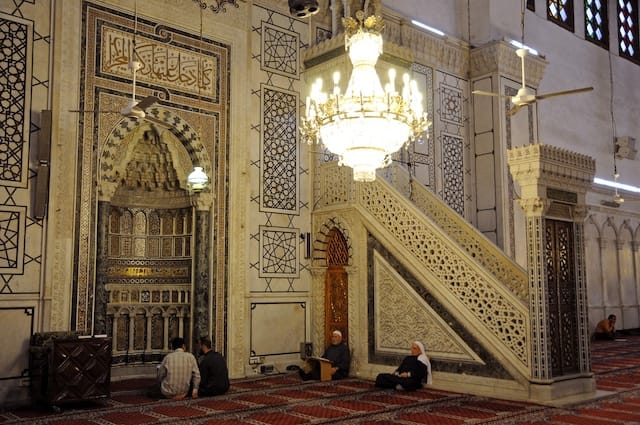
In the spring of 1911, as the vast Ottoman Empire was crumbling and the Muslim world faced unprecedented internal turmoil and external ideological assault, a powerful sermon was delivered in the historic Umayyad Mosque in Damascus.
The speaker was the young Kurdish Islamic scholar, Bediüzzaman Said Nursi (1877–1960).
Delivered to a massive audience that included over a hundred religious scholars, this address—later published as The Damascus Sermon (Khutbat al-Shāmiyyah)—became a foundational text for his intellectual movement, diagnosing the ailments of the Ummah and prescribing a timeless cure rooted in the Qur'an.
The 1911 sermon of Bediüzzaman Said Nursi was a masterful diagnosis of the spiritual and social crises facing the Muslim world, yet its message is not confined to one time or place.
It offers a profound, timeless critique of the six maladies that afflict the global community today, providing essential guidance for anyone committed to meaningful change.
Nursi’s analysis identifies the core weaknesses in human society—both within and outside religious communities—and prescribes Qur'anic remedies that are universally applicable for establishing peace, justice, and collaboration.
A Brief Biography of Bediüzzaman Said Nursi
Bediüzzaman (meaning ‘Wonder of the Age’) Said Nursi (1877–1960) was one of the most influential Muslim thinkers and reformers of the 20th century.
Born in the village of Nurs, in what is now Turkey, he displayed extraordinary intelligence and memory from a young age, earning his honorific title.
Initially known as the “Old Said,” he was involved in political life, advocating for constitutionalism and the unification of traditional Islamic education with modern sciences.
He proposed the establishment of a university called Medresetü’z-Zehra in Eastern Anatolia, where religious sciences and physical sciences would be taught together to eliminate both fanaticism and secular doubt.
He believed the future would place a high value on science and logic.
After World War I and the collapse of the Ottoman Empire, Nursi transitioned into the “New Said” period, completely withdrawing from active politics.
He endured decades of imprisonment and exile under the new Turkish Republic, which pursued a strict secularist agenda.
During this time, he dedicated himself to writing his magnum opus, the Risale-i Nur (Epistles of Light) Collection, a voluminous Qur'anic commentary.
The Risale-i Nur uses reasoned arguments, analogies, and logic to demonstrate the truths of faith (īmān) in the face of modern materialism and atheism.
His teachings emphasized peaceful, non-aggressive service to faith and inspired the global Nurcu movement.
The Six Maladies in the Modern World
Nursi’s six poisons, which he saw leading to the decline of civilization, are strikingly visible in today’s global landscape, along with their suggested cures:
1. Despair and Hopelessness
- Malady: This manifests in climate change anxiety, political cynicism, existential crises, and feelings of helplessness in the face of poverty and inequality.
- Remedy (Nursi’s Cure): Hope in Divine mercy, and the rational conviction that constructive effort and truth will ultimately prevail.
2. Loss of Truthfulness (Lying)
- Malady: This is seen in the spread of disinformation, "fake news," and manipulative propaganda in politics and media, severely eroding trust in institutions.
- Remedy (Nursi’s Cure): Truthfulness (Sidq) and sincerity, which must form the bedrock of all personal and organizational interactions.
3. Enmity and Hatred
- Malady: This takes the form of polarization fueled by identity politics; xenophobia, racism, and religious persecution; and aggressive nationalism.
- Remedy (Nursi’s Cure): Love, compassion, and kindness toward all people, emphasizing shared humanity and mutual respect.
4. Lack of Unity and Solidarity
- Malady: This is evident in global geopolitical fragmentation; isolationism; and the inability of international bodies to solve crises due to competing national interests.
- Remedy (Nursi’s Cure): Islamic Unity and, by extension, human unity (Ta'āwun), promoting sincere, cooperative partnership for common goals.
5. Subservience to Tyranny/Despotism
- Malady: This includes the rise of authoritarianism worldwide; unchecked corporate power; and the silent surrender of individual liberties to mass surveillance.
- Remedy (Nursi’s Cure): Consultation (Shūrā), democratic inclusion, mutual discussion, and self-criticism to ensure accountability and shared governance.
6. Dispersal of Efforts/Egoism
- Malady: This is characterized by hyper-individualism, consumerism, and greed; the pursuit of personal wealth or fame at the expense of community and environment.
- Remedy (Nursi’s Cure): Dedication to Work and a steadfast focus on public welfare (Maslaha al-'Aammah), giving precedence to collective good over personal gain.
Relevance for Global Leadership and Community Building
For thought leaders, Nursi’s message is a practical roadmap for organizational leadership and public impact.
- Combating Global Disinformation: The modern crisis of truthfulness is perhaps the most paralyzing. Nursi’s call demands that all communication be rooted in sincerity and factual integrity, making the fight against lying and propaganda a central tenet of modern advocacy.
- Fostering Collaborative Partnerships: The antidote to global disunity is the pursuit of genuine solidarity. Building organizations and launching impactful campaigns—as you have done—requires transcending internal turf wars and external identity clashes. Nursi’s remedy of unity encourages the formation of broad coalitions based on shared principles of service and justice.
- Leading with Hope: Today's leaders cannot afford to succumb to the prevailing despair. Nursi's legacy teaches that genuine, lasting transformation is a spiritual and intellectual endeavor, not merely a political one. It requires rational optimism—a hopeful vision grounded in effort and principle, which serves to mentor and inspire emerging leaders.
- Prioritizing Public Service: The modern fixation on personal brand and profit exemplifies the malady of egoism. Nursi’s remedy redirects this energy toward public welfare. This is the essence of non-profit leadership: dedicating all organizational efforts to a higher, communal purpose.
Nursi's sermon is a compelling reminder that the biggest battles facing humanity—from corruption and authoritarianism to climate change and polarization—are fundamentally battles of the soul. They are won not by military might or political maneuvering alone, but by committing to the timeless moral virtues of truth, unity, and hope in every sphere of public life.
Sources for Further Reading
- Nursi, Badiüzzaman Said. The Damascus Sermon (Khutbat al-Shāmiyyah). Translated by Şükran Vahide, Sözler Publications (or similar reputable publisher).
- Vahide, Şükran.18 Bediuzzaman Said Nursi: The Author of the Risale-i Nur. (A detailed biography and historical context).
- Academic Articles on Said Nursi’s methodology, especially those focusing on the Khutbat al-Shāmiyyah's rhetoric and social reform agenda.