The "Open Secret" in Muslim Charity: Are We Funding Influencers Instead of the Poor?
Is your sadaqah (charity) actually reaching those in need, or is a significant portion being diverted to pay the person asking for it?
In recent years, the landscape of Muslim charitable giving has been transformed by the rise of social media influencers.
While these digital personalities have the power to mobilize millions for humanitarian causes, a recent episode of the MuslimMatters podcast raises a troubling question: Is your sadaqah (charity) actually reaching those in need, or is a significant portion being diverted to pay the person asking for it?
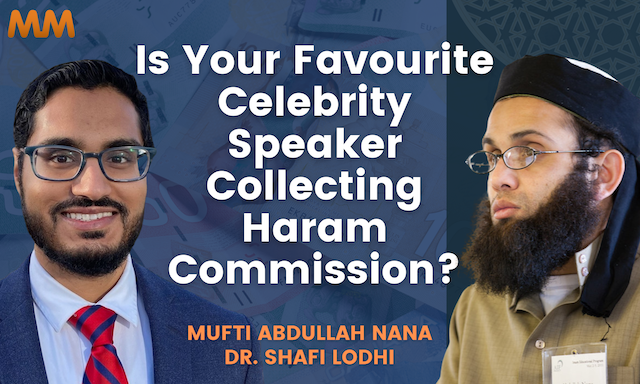
In a candid discussion hosted by Zainab bint Younus, Mufti Abdullah Nana and Dr. Shafi Lodhi address the "open secret" of commission-based fundraising within the North American Muslim community.
Their insights provide a much-needed ethical framework for donors who want to ensure their contributions are handled with integrity.
The Problem with Commission-Based Fundraising
The core of the controversy lies in the shift from flat-fee compensation to percentage-based commissions.
Traditionally, speakers or fundraisers were paid a set honorarium for their time and effort.
However, the podcast highlights a growing trend where influencers and professional fundraisers take a cut—sometimes as high as 20% to 30%—of every dollar raised.
The guests argue that this creates a fundamental conflict of interest.
When a fundraiser’s personal income scales with the amount collected, the focus often shifts from the organization’s mission to high-pressure, manipulative tactics designed to maximize immediate "cash grabs."
This "gold rush" mentality can lead to sensationalism and the exploitation of the suffering of others for views and donations.
The Islamic Legal Perspective
Mufti Abdullah Nana provides a critical theological critique of these practices.
While some argue that Islamic law permits "collectors of zakat" (amileen) to be paid from the funds, Mufti Nana clarifies that this refers to fair compensation for labour, not an uncapped percentage of the take.
In the language of fiqh (Islamic jurisprudence), such commission-based contracts are often categorized as sharṭ fāsid—a "corrupt condition."
The reasoning is that charity is built on the concept of amanah (trust).
When a donor gives $100 thinking it will buy food for a family, and $30 of that is quietly diverted to an influencer’s bank account without the donor's consent, it introduces an element of gharar (uncertainty or deception).
Because the donor did not intend to "give" to the influencer, the very structure of the transaction is ethically and legally compromised.
The Erosion of Public Trust
Beyond the legalities, Dr. Shafi Lodhi emphasizes the long-term damage to the charitable sector.
The lack of transparency regarding administrative costs and fundraiser payouts undermines the "social contract" between Muslim NGOs and the community.
The guests point out that many donors are unaware that their "tax-deductible" donation might be funding a luxury lifestyle for a digital creator.
When these practices eventually come to light—as seen in recent controversies—the resulting backlash doesn't just hurt one charity; it erodes the community's willingness to give to any cause, potentially harming legitimate humanitarian work worldwide.
Reclaiming the Ethics of Giving
The podcast serves as a call for both institutional reform and donor education.
For organizations, the guests suggest moving back to transparent, flat-fee structures and adopting a "Donor Bill of Rights."
This would include full disclosure of how funds are allocated and what percentage goes toward fundraising costs.
For donors, the advice is simple: ask questions.
Before clicking the "donate" link on an influencer’s bio, take a moment to look at the charity's financial reports or ask if the fundraiser is receiving a commission.
Supporting local organizations and building long-term relationships with reputable charities can help bypass the "influencer tax" and ensure that your sadaqah serves its true purpose.
Ultimately, the goal is to restore the purity of intention (niyyah) in the act of giving.
By demanding higher standards of transparency, the Muslim community can ensure that their charity remains a source of blessing for both the giver and the recipient.
Is Your Charity Paying Influencers?
This video features the full discussion between Mufti Abdullah Nana and Dr. Shafi Lodhi, providing deeper context on the ethical and legal issues surrounding commission-based fundraising in the Muslim community.