
The Diaspora Advantage: Turning Identity into Innovation
My identity wasn’t something to hide. It was the reason my work mattered. As Derek Walcott wrote: “The sea is history.” And for those of us in the diaspora, we carry that history with us — in how we think, in how we create, in how we build.
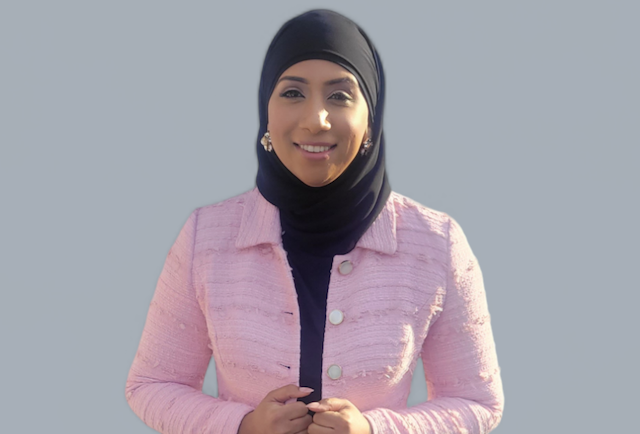
By Sarah Juman-Yassin
(Speech delivered at a conference, hosted by the International Centre for Migration and Diaspora Studies (MIDIAS), held from March 30 – April 1, 2026 at the University of Guyana, Turkeyen Campus, under the theme “Diaspora Matters: Belonging, Technology and Diaspora in the 21st Century” https://ugdiasporacentre.uog.edu.gy/diaspora-conference-2026/)
There’s a saying in Guyanese culture: “One One dutty build dam”
It means that even the smallest beginnings—with consistency, resilience, and vision— can become something extraordinary.
And that’s the story of the diaspora.
I come from a long line of builders.
Entrepreneurs before entrepreneurship had a name. Visionaries before there was visibility.
Rooted in Guyana, carried across borders, and lived out in the diaspora.
I left Guyana when I was two years old — so I don’t remember the leaving.
But I inherited something far more powerful than memory.
I inherited mindset.
A way of seeing opportunity. A way of creating something from nothing. A way of building—no matter the circumstance.
And that’s why I see diaspora differently.
Because diaspora is often defined by movement — migration, displacement, relocation.
But I believe diaspora is not just about where you come from.
It’s about what you see because of where you’ve been.
My name is Sarah Juman-Yassin, and today I want to talk about what I call: The Diaspora Advantage.
THE IN-BETWEEN EXPERIENCE
I was raised in Toronto—in a home filled with Guyanese culture:
The smell of spices in the kitchen… the sound of laughter that filled every room… plates of pholourie passed around like love made visible.
And then I would step outside into a world that didn’t always reflect that back to me.
And like many in the diaspora, I grew up navigating two realities:
Who I was at home… and who the world expected me to be.
For a long time, I thought that tension meant I didn’t fully belong anywhere.
But what I’ve come to understand is this:
That “in-between” space is not a weakness. It is a vantage point.
Because when you don’t fully belong to one system, you begin to see where it’s broken.
You notice what’s missing. You feel what’s overlooked.
And that…is where innovation begins.
LEGACY MEETS LENS
As Marcus Garvey once said: “A people without the knowledge of their past history, origin and culture is like a tree without roots.”
I was raised with roots.
Both of my grandfathers were entrepreneurs. My paternal grandmother was an entrepreneur. My father is an entrepreneur. My brothers are entrepreneurs.
I didn’t learn entrepreneurship from a book.
I learned it by watching people build— out of necessity… out of faith… out of vision.
Because in Caribbean families, entrepreneurship isn’t just about business.
It’s about survival. It’s about dignity. It’s about saying: “We may not have access—but we will create opportunity.”
So while the world taught me how to navigate systems…
My family taught me something even more powerful:
You don’t always have to fit into systems. You can build your own.
SEEING WHAT OTHERS MISS
The first time I did that was in university.
As a Muslim woman, I couldn’t find modest fashion that felt like me.
Everything felt like a compromise.
So I built my own clothing line.
And that was my first lesson in diaspora innovation:
When you don’t see yourself reflected—you’re not the problem. The gap is.
And diaspora individuals—because of how we move through the world—we are trained to see those gaps.
THE DETOUR
But like many children of immigrants, I still followed what I thought was the “right” path.
I went into corporate finance.
And I succeeded.
On paper, everything looked right.
But inside…I felt disconnected.
Because I wasn’t building.
I was living within someone else’s definition of success.
And a quiet voice kept coming back:
You are more than this.
THE TURNING POINT
In 2019, my mom sent me a photo of a charcuterie board.
And something about it sparked.
Because for me, food has always been deeper than food.
In Guyanese culture— food is connection. Food is care. Food is how we say, “You belong here.”
But I also remembered all the spaces where I didn’t feel that.
Events where I couldn’t eat anything. No halal options. No consideration.
Just standing there… present… but not included.
And in that moment, everything aligned.
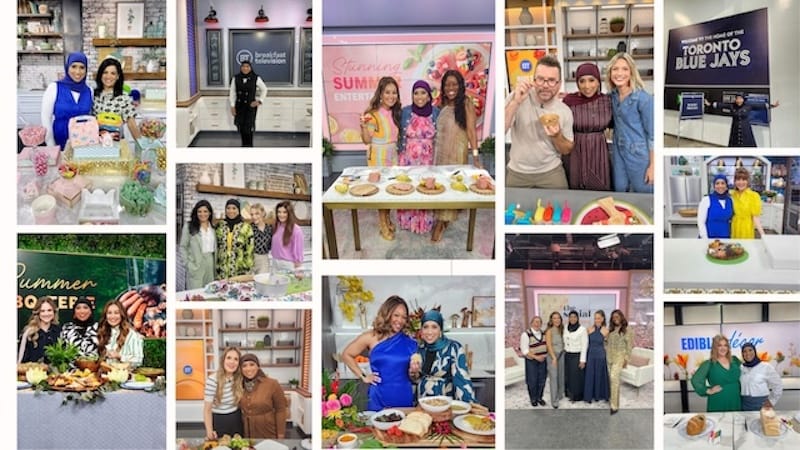
BUILDING WITH PURPOSE
So I built Grazing Platters in the 6ix.
Not just as a business— but as a response.
A response to exclusion. A response to invisibility. A response to that feeling of not belonging.
I created experiences that were inclusive, intentional, and beautiful—
for people who eat halal, vegan, gluten-free— and for anyone who has ever felt….overlooked.
Because belonging should never be an afterthought.
OWNING THE ADVANTAGE
But even then, I hesitated to be visible.
Because I didn’t see anyone in my industry who looked like me.
And for a moment, I thought that meant I needed to shrink.
Until I realized: My identity wasn’t something to hide. It was the reason my work mattered.
As Derek Walcott wrote: “The sea is history.”
And for those of us in the diaspora, we carry that history with us — in how we think, in how we create, in how we build.
THE DIASPORA ADVANTAGE
So when I talk about the diaspora advantage, this is what I mean:
It’s the ability to move between worlds— and translate them.
To see what’s missing— and create it.
To take lived experience and turn it into innovation.
Diaspora is not fragmentation.
It is expansion. It is perspective. It is power.
RESPONSIBILITY & IMPACT
Because when you come from communities like ours—you’re not just building for yourself.
You’re building for the people who came before you… and for the ones who are watching you.
It is said, “We all carry our ancestors within us.”
So when we build—we are building with them.
And being here… speaking at the University of Guyana…this feels full circle.
Because while I left Guyana at two years old—Guyana never left me.
It lived in how I was raised… in how I think… in how I build.
And today, as Guyana continues to grow and evolve on the global stage…there is an incredible opportunity:
Not just to develop industries— but to shape identity, culture, and innovation in a way that is uniquely ours.
Because the diaspora is not separate from Guyana.
We are an extension of it.
And what we’ve learned… what we’ve built… what we’ve experienced…
we bring that back.
CLOSING
So if you’ve ever felt like you don’t fully belong…
If you’ve ever felt like you’re navigating multiple worlds…
If you’ve ever questioned where you fit…
Maybe the question was never:
“Where do I belong?”
Maybe the question is: “What am I here to build?”
Because the truth is—we don’t find belonging.
We create it.
We build it. We design it. We make space for it— for ourselves, and for everyone coming after us.
So to everyone here…especially those who have ever felt in-between - don't shrink to fit systems that were never designed for you.
Build systems that reflect who you are.
Because your identity is not a limitation.
It is your advantage. It is your blueprint. It is your power.
And when you fully step into that — you don’t just change your life.
You change what’s possible for others.
We were never meant to fit in.
We were born to build.
(Sarah Juman-Yassin is a Corporate Finance Leader | Founder of @grazingplattersinthe6ix | TV Personality & Speaker | Seen on Breakfast TV, CTV Your Morning, The Social, CityLine, The Good Stuff | Championing Inclusive Food Artistry).