
Rethinking Professional Development in Islamic Schools: From Teachers to Murabbis
School leaders must see themselves not only as managers, but as cultivators of people. Because ultimately, the culture of a school is shaped by those who lead it.
Islamic schools across the West are filled with passionate, capable educators.
Our teachers are well-trained, skilled in pedagogy, and deeply committed to their students.
They create engaging classrooms, build relationships, and strive for academic excellence.
But we must ask a more fundamental question: Are we developing teachers—or are we forming Murabbis?
Because the future of Islamic education depends on that distinction.
The Context We Cannot Ignore
Most educators in Islamic schools today were raised in Western, secular environments.
This shapes how we understand discipline, authority, success, and even the purpose of education itself.
This is not a criticism—it is our shared reality.
However, it also means that many teachers have not experienced a traditional model of Islamic tarbiyah.
They were not formed under Murabbis who nurtured faith, character, and identity alongside knowledge.
As a result, we cannot assume that teachers will naturally become Murabbis simply by working in an Islamic school.
That transformation must be intentional.
Why the Murabbi Matters
In today’s world, students are constantly influenced by competing values.
Social media, culture, and peer environments all shape their identity in powerful ways.
In this context, teaching content is not enough.
Students need educators who:
• Model adab consistently
• Respond with wisdom and patience
• Integrate faith into everyday moments
• Shape character, not just intellect
A Murabbi does not simply teach Islam—they embody it.
And students are not just taught by them—they are formed by them.
The Gap in Professional Development
Most professional development in Islamic schools mirrors public systems—focused on instruction, assessment, and classroom management.
These are important, but they are incomplete.
What is often missing is intentional formation in:
• Islamic worldview and purpose
• Character and adab
• Reflective, faith-centered practice
• Applying Islamic principles in real classroom situations
Without this, we risk producing strong instructors who are underprepared for the deeper responsibility of shaping identity and faith.
A Path Forward: Murabbi Formation
Murabbi development must be embedded into the life of the school—not treated as an add-on.
A practical approach includes:
• Real-Life Reflection: Analyzing classroom scenarios through a Murabbi lens
• Teacher Halaqahs: Regular learning with scholars to deepen understanding of character and purpose
• Mentorship: Ongoing guidance from leaders who model Murabbi qualities
• Growth Plans: Setting intentional goals tied to adab and character development
• Recognition & Collaboration: Celebrating and sharing examples of Murabbi practice
This work builds habits, not just knowledge.
It shifts teaching from technical practice to purposeful formation.
A Leadership Responsibility
Murabbi formation does not happen by accident.
It requires leadership that is intentional, consistent, and grounded in purpose.
School leaders must see themselves not only as managers, but as cultivators of people.
Because ultimately, the culture of a school is shaped by those who lead it.
The Stakes Are Too High
If we want students to carry Islam with confidence and character into the future, we must invest in those who shape them every day.
Murabbi formation is not optional. It is the core of Islamic education.
When we develop Murabbis, we do more than improve teaching—we cultivate individuals who anchor faith, model character, and sustain Islam in the West.
And that is a responsibility we cannot afford to overlook.
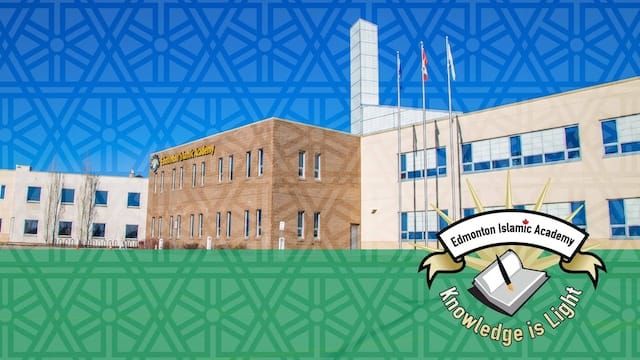
Abraham Abougouche is the principal of Edmonton Islamic Academy (EIA), the largest private school in Western Canada and largest faith-based Islamic school in North America. EIA has over 1700 students (Pre-School - Grade 12) and over 165 staff members.