
Ramadan in March 1991: The Opening of the Islamic Foundation of Toronto
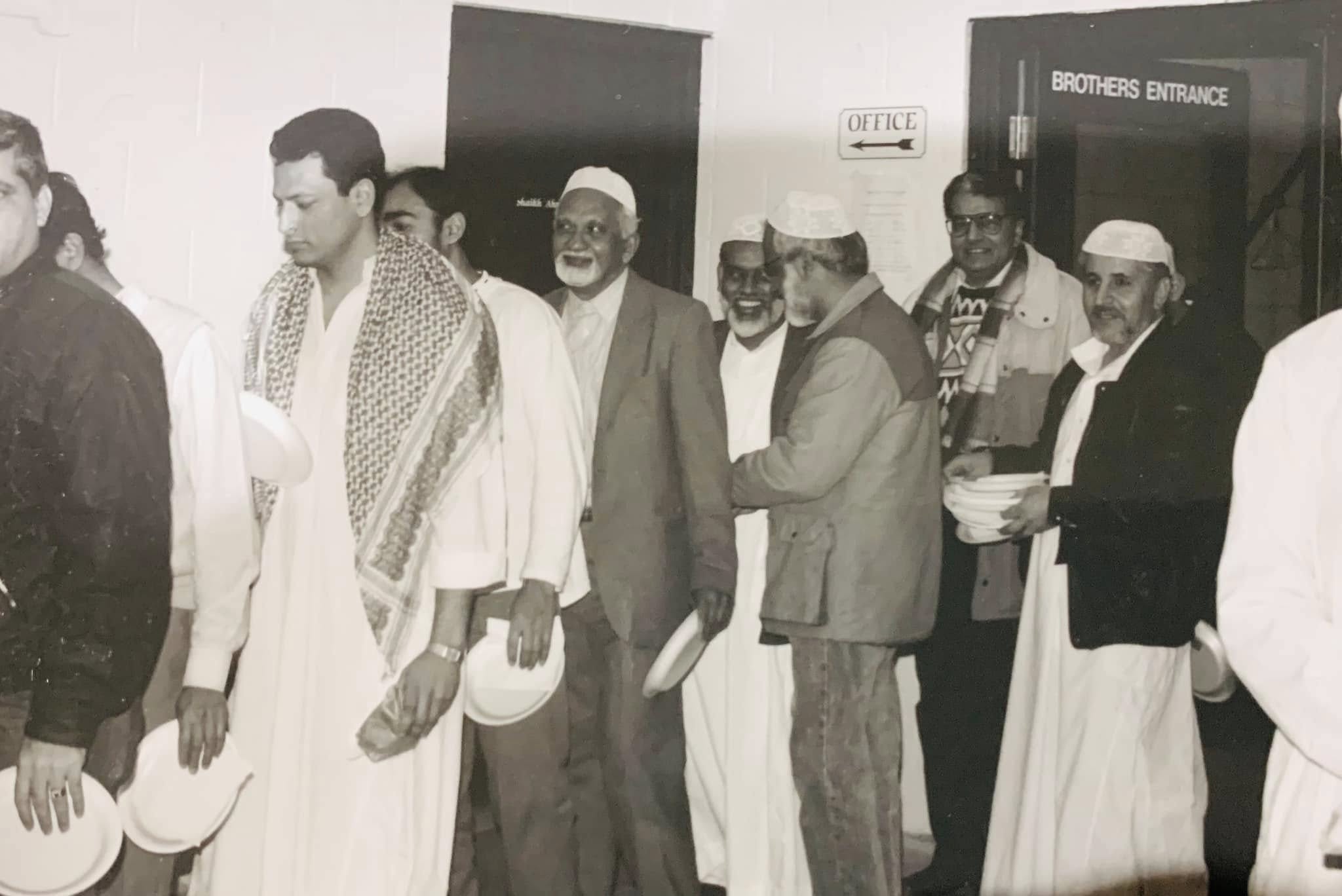
In March 1991, the Foundation officially moved into the new building, and prayers were offered there for the first time. It was the month of Ramadan and between 800 to 1,000 Muslims attended the Centre for Salaatul Isha and Taraweeh.
By Muneeb Nasir
By the spring of 1991, a long journey that had begun two decades earlier reached its defining moment.
After years of planning, fundraising, and construction — and after enduring setbacks, obstacles, and delays — the Islamic Foundation of Toronto opened the doors of its new Islamic Centre on Nugget Avenue in Scarborough on March 21st, 1991.
The occasion marked far more than the completion of a building; it was the realization of a vision nurtured by a small group of believers who had refused to waver in their faith.
What had begun in a small building on Rhodes Avenue in East York had now grown into one of the largest and most active Islamic institutions in Canada.
A Historic Opening
In March 1991, the Foundation officially moved into the new building, and prayers were offered there for the first time.
It was the month of Ramadan and between 800 to 1,000 Muslims attended the Centre for Salaatul Isha and Taraweeh.
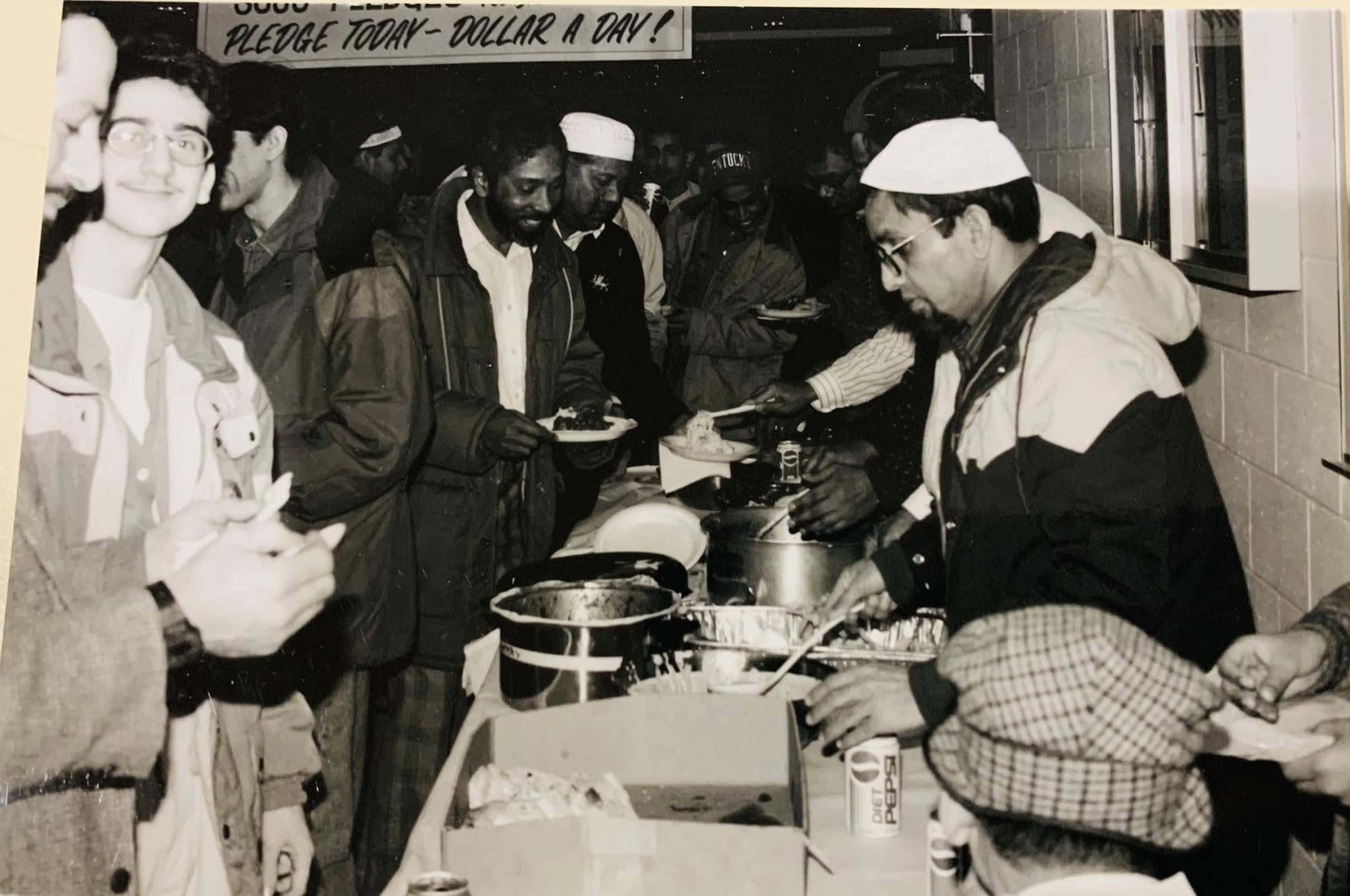
Weekend Iftar dinner programs drew close to 1,000 people and approximately $300,000 was raised during the month of fasting.
For many in the community, walking into the Centre was a profoundly emotional experience.
They remembered the years of meetings in basements, the cold fundraisers in school cafeterias, and the countless volunteer hours that had gone into every stage of construction.
The new mosque, with its soaring dome and spacious prayer hall, was a testament to perseverance and faith.
It stood as a symbol of what a committed community could achieve when guided by sincerity and unity.
For the Foundation’s leader Mohamed Nasir who had led the congregation since 1974 to the realization of the new Centre, this was not a moment of triumphalism but of humility.
Imam Ahmad Kutty, in his message to the community, reminded everyone that the real work was only beginning. “The mosque,” he wrote, “is not an end in itself, but a means — a means to nurture faith, knowledge, and righteous conduct.”
He cautioned against viewing the completion of the Centre as the culmination of a project; rather, it was the start of a new mission: to make the mosque a living institution of education, spiritual growth, and service to humanity.
New Structures and Programs
As soon as the Foundation took possession of the Centre, its committees began reorienting their work to meet the needs of a larger and more complex institution.
The Program Committee responsible for general programming, chaired by Muneeb Nasir, prepared an ambitious schedule of educational and community activities. Along with Nasir, the Committee consisted of Irfan Alli, Manzil Bacchus, Ahmad Kassim, Fareed Amin, Nadeem Syed, Mohammad Ghousuddin, Asad Chowdhary and Maqbool Mughal.
A new Co-ordinating Program Committee with members Muneeb Nasir, Shaikh Ahmad Kutty, Irfan Alli, Aziz Rehman, Helmi Abdul Rahman and Jamil Dar now had the responsibility for overseeing all activities within the Centre, including Youth, General Programs and Sisters Programs.
Weekly tafsir sessions by Imam Kutty resumed, along with Friday study circles, youth meetings, and Islamic lectures.
A Sisters’ Workshop and Youth Forum were launched, while a committee was formed to oversee the establishment of an Islamic school — an aspiration that had long been part of the Foundation’s vision.
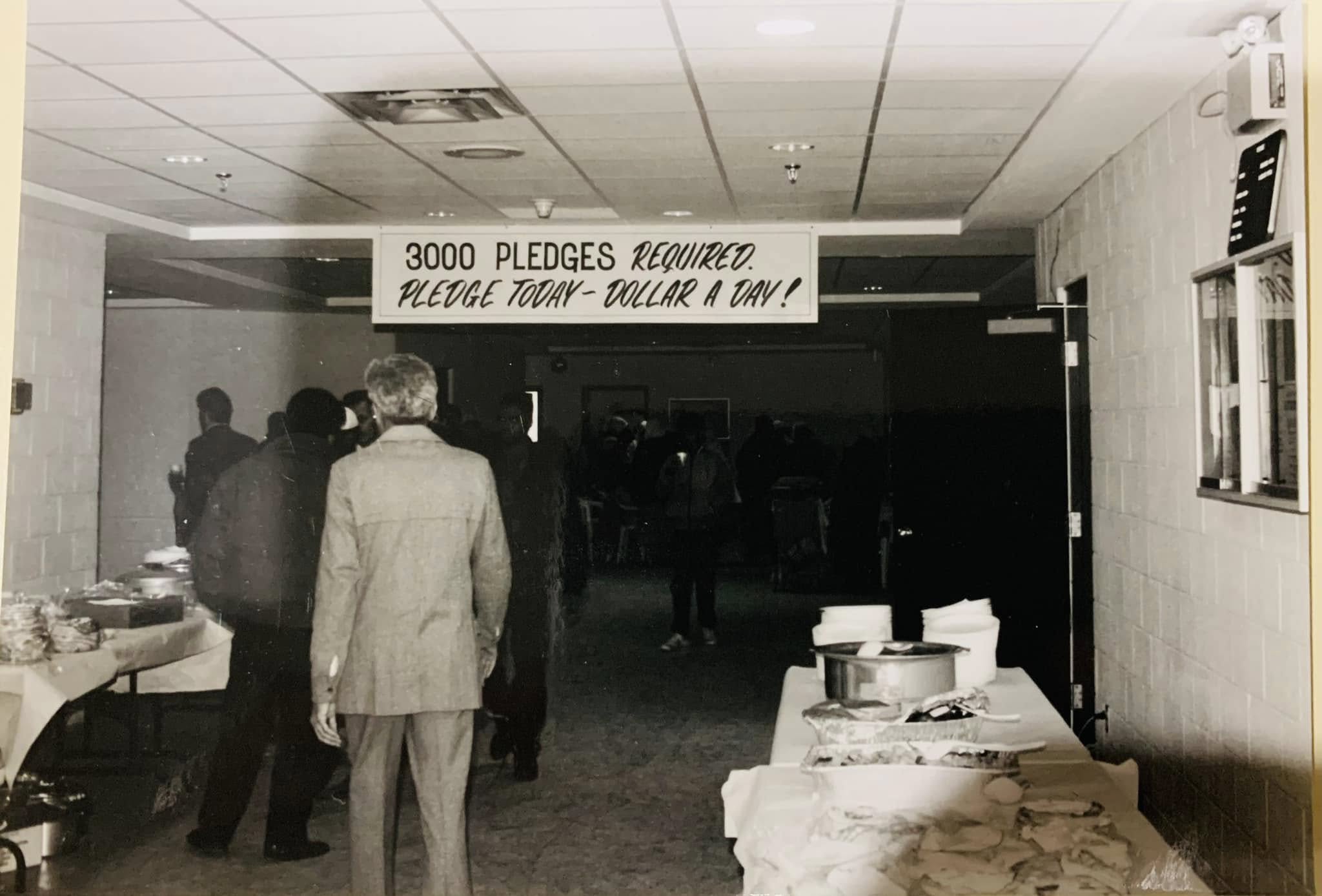
The Fund Raising Committee, chaired by Mohamed Anwar, continued its tireless efforts to meet the financial demands of the project.
Although the main structure was complete, several critical facilities — including classrooms, offices, and the parking area — still required funding.
Community members were encouraged to contribute monthly pledges to ensure the Foundation’s financial stability.
The Public Relations Committee, meanwhile, worked to strengthen ties with neighbours, civic officials, and other faith communities.
The opening of the Centre was covered by local media, and visitors from across Toronto came to tour the new building, which stood as a beacon of Muslim presence and contribution in the city.
Spiritual Renewal and Reflection
The early weeks at the new Centre were marked by renewed spiritual energy.
The mosque quickly filled for Friday prayers, and evening programs drew large audiences.
In his khutbahs, Imam Kutty spoke about the moral responsibilities that came with success. “If we wish to preserve the blessings of Allah,” he reminded the congregation, “we must remain grateful and humble. The test of gratitude is in service.”
He urged members to remember that the Prophet ﷺ and his Companions had always linked the building of mosques to the building of hearts — to moral and intellectual formation.
The Centre, he said, must become “a school of character, where believers learn humility, patience, and compassion.”
Voices of the Community
Al Bashir magazine also carried expressions of joy and gratitude from members who had witnessed the Foundation’s evolution from its early years.
Volunteers recalled the challenges faced during the construction — from city permit battles to financial shortfalls — and the extraordinary generosity that had seen them through each stage.
Many spoke of the sense of belonging the new Centre fostered.
For the first time, Toronto’s Muslim community had a permanent home large enough to gather for major events, host educational programs, and serve the growing number of Muslim families settling in Scarborough.
The Al Bashir magazine also highlighted the youth movement within the Foundation.
Young volunteers had taken active roles in setting up events, coordinating Eid programs, and maintaining the mosque.
Their enthusiasm reflected the Foundation’s enduring belief that the future of Islam in Canada lay in the education, empowerment, and moral grounding of its youth.
Looking Forward
As the first prayers echoed through the new mosque, there was a palpable sense that a new era had begun.
The building stood as a monument to collective sacrifice — each brick representing the faith, labour, and du‘a of the community.
But as Imam Kutty reminded them, the true foundation of the Centre would not be its structure but its spirit. “A mosque becomes a house of God,” he said, “when it is filled with hearts devoted to Him.”
The Islamic Foundation of Toronto had achieved a great milestone, but it saw this not as an ending, rather as the beginning of a new responsibility — to nurture a community that embodied the very principles upon which the mosque had been built: knowledge, service, and unity.
The spring of 1991 would forever be remembered as the season when the community’s dream finally took form — a house of worship and learning standing tall in Scarborough, proclaiming through its presence that Islam had taken deep and lasting root in Canada.
(A chapter from the upcoming publication on the history of the Islamic Foundation of Toronto).