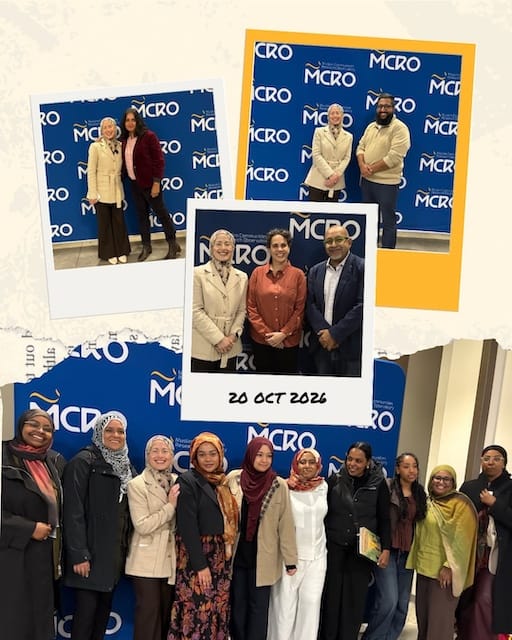
New Research Observatory Connects Muslim Communities with the Data They Need
Advocates, journalists, and civic leaders working on issues that affect Muslim communities have long faced the same problem: the research exists, but it is hard to find when it matters. A new Canadian initiative, the Muslim Communities Research Observatory (MCRO.ca), aims to fix that.
Advocates, journalists, and civic leaders working on issues that affect Muslim communities have long faced the same problem: the research exists, but it is hard to find when it matters.
Important studies sit behind academic paywalls, while community-commissioned surveys and municipal consultations are buried in obscure online archives.
A new Canadian initiative, the Muslim Communities Research Observatory (MCRO.ca), aims to fix that.
Its motto is "Illuminating realities. Guiding change." The platform collects, categorizes, and summarizes research on Muslim populations from Canada and abroad, all in one place.
From Paywalls to Public Action
MCRO is led by Amira Elghawaby, Canada's first Special Representative on Combatting Islamophobia (2023–2026); broadcast journalist and communications strategist Ginella Massa; and international operations specialist Rabea Sultan.
The founders saw that advocacy often stalls because decision-makers rarely act without solid data in front of them.
Universities regularly produce findings on labour market bias, institutional discrimination, and public health disparities, but those findings rarely reach school board trustees, city councillors, or Members of Parliament.
MCRO organizes hundreds of peer-reviewed articles, NGO reports, and government statistical releases into a searchable repository and interactive research atlas.
Its records cover Canada, the United States, Europe, Australia, and New Zealand, and span topics from workplace inclusion and youth experiences in schools to elder care in immigrant communities.
Research Made Usable
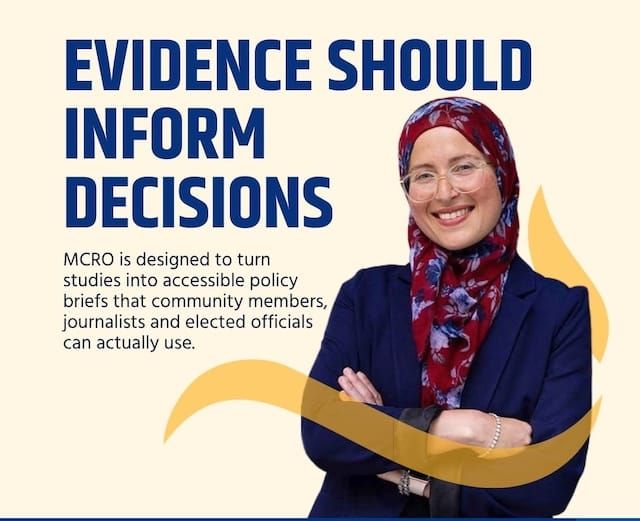
MCRO focuses on making research easy to apply, not just easy to store.
It is built for people with limited time: grassroots advocates, community organizers, and reporters on deadline.
Resources are tailored to four groups:
- Advocates get two-page policy briefs they can read on the way to a meeting with an elected official, explaining what the evidence does and does not show.
- Community leaders get data for identifying service gaps in areas such as youth mental health and elder care, along with practical advocacy toolkits.
- Journalists and policy analysts get verified citations, historical data, and direct links to sources.
- Everyday citizens, including parents, workers, and students, get credible facts to use at neighbourhood councils or workplace equity committees.
Featured publications include the University of Toronto Institute of Islamic Studies' Survey of Muslims in Canada and recent analyses of underemployment across Ontario.
Why It Matters for Community Institutions
For non-profit leaders, MCRO is a welcome step forward.
Personal testimony and emotional appeals show why injustices matter, but lasting policy change also requires evidence, institutional memory, and long-term planning.
When non-profits and civic organizations ground their work in verifiable facts, they can move from defending themselves to contributing proactively. A central, evidence-based reference also builds credibility and trust across faith and civic lines.
MCRO is supported by a global network of academic research partners and a grassroots advisory network of organizers and practitioners.
Researchers, institutions, and community charities are invited to submit their reports so that local knowledge is preserved, catalogued, and widely shared.
As Canadian Muslim communities navigate shifting social, economic, and legislative conditions, MCRO aims to keep public conversations grounded in facts and research.