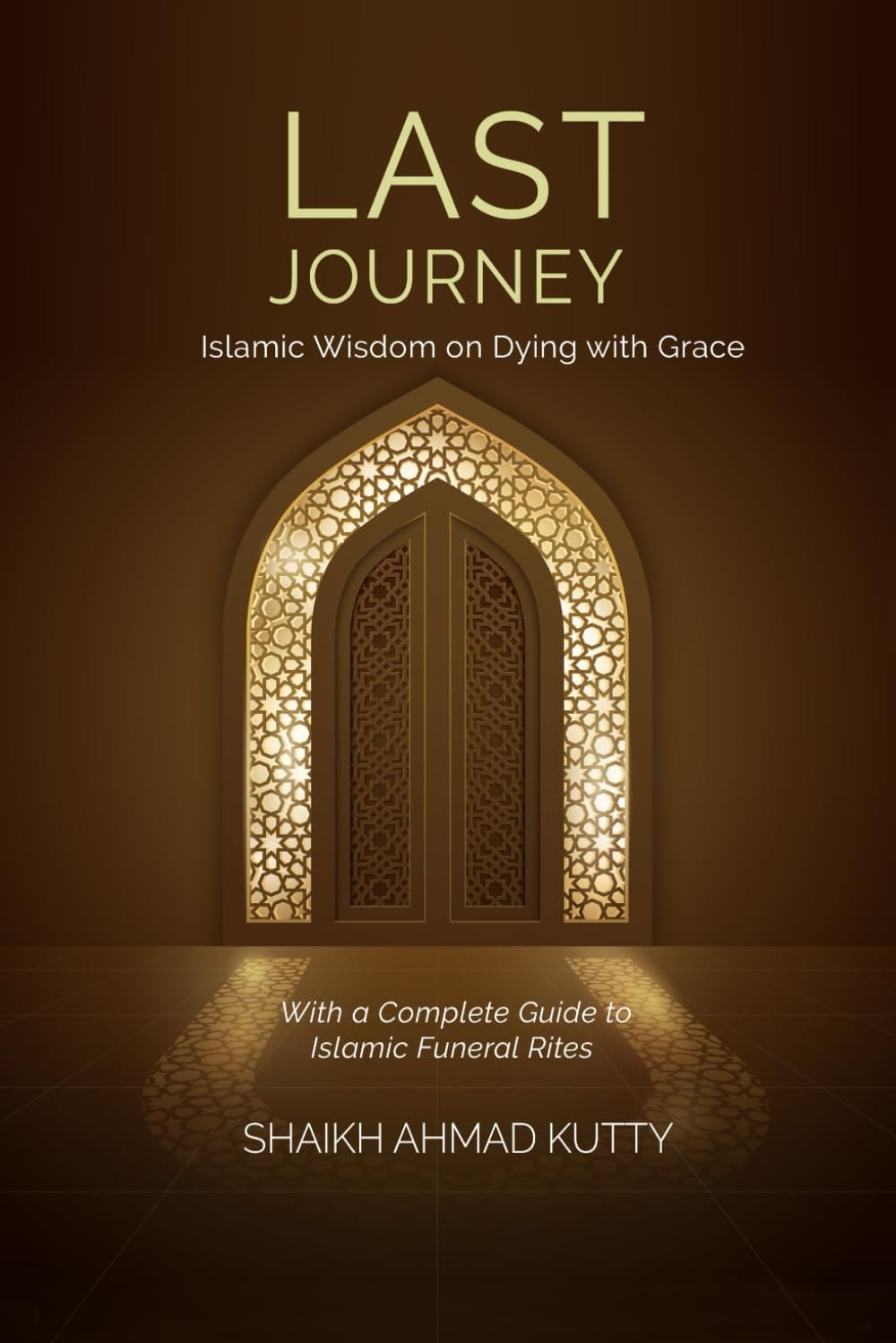
Navigating the Sacred Threshold: A Review of Shaikh Ahmad Kutty’s Last Journey
Whether you are a caregiver supporting a loved one, a healthcare professional seeking to understand the needs of Muslim patients, or an individual reflecting on your own return to Allah, Last Journey is an "essential addition to the library."

Death is perhaps the only certainty in life, yet for many, it remains an "uncomfortable subject" that affects each one of us as we eventually face the "last journey across the threshold into eternity".
In his latest work, Last Journey: Islamic Wisdom on Dying with Grace, Shaikh Ahmad Kutty challenges this silence.
He presents death not as a finality to be feared, but as a "meaningful and sacred transition" that requires both spiritual and practical preparation.
Published in late 2025, this book arrives as a comprehensive companion for a journey that every soul must eventually take.
A Legacy of Service in the GTA
What sets Last Journey apart is the deep well of experience from which it is drawn.
Shaikh Ahmad Kutty is not merely writing from a theoretical perspective; he is sharing the fruits of over fifty years of pastoral care.
For those in the Greater Toronto Area (GTA), his voice is a familiar one.
Since the mid-1970s, beginning with his early years at Jāmi Mosque, he has been a steady presence in the region's hospital systems.
Reflecting on the motivation behind this work, Shaikh Kutty notes that the book was written with the benefit of the wider community in mind—including Muslims, non-Muslims, imams, and chaplains.
"By Allah’s grace, I have been assisting hospitals in this region since the mid-1970s... and they continue to reach out to me during critical moments," he shares.
After half a century of service, he felt it was vital to share these experiences, particularly for younger spiritual care providers who may not yet be acquainted with these increasingly common realities.
This "rigorous approach, tempered by decades of pastoral work with the bereaved and the dying," provides the reader with "profound insight into the subject of death".
It is a book "anchored in lived experience that readers will find immediately relevant".
A Lifelong Process of Preparation
The author operates on the principle that preparing for death is not a task reserved for our final moments.
Instead, it is a "lifelong process that involves caring for both the body and the mind".
By integrating "everyday spiritual awareness and practice," the book shows that the last journey begins long before the final breath.
This perspective shifts the focus from fear to intention. It encourages readers to live ethically and trust fully in God’s mercy, echoing the Qur’anic assurance:
"Every soul is certain to taste death: We test you all through the bad and the good, and to Us you will all return" (21:35).
Balancing Tradition and Modern Reality
For many families navigating the North American healthcare system, the end of life involves a difficult balance between sacred rites and modern medical protocols.
Last Journey serves as a vital guide through these "sensitive and complex situations." It provides "emotional support and clear religious understanding" where standard medical manuals often fall short.
The book meticulously details the sacred rites of the faith—from the initial "vigil of final illness through the sacred rites that follow—ritual bath, shroud, prayer, and burial".
By calling each act "sacred," the author reminds us that these are not just duties, but "acts of love, worship, and honour for the person who has passed away".
Crucially, this edition addresses contemporary challenges through the lens of maqāṣid al-sharīʿah (the higher objectives of Islamic law).
It provides concrete guidance on modern ethical dilemmas such as:
- Organ donation
- Palliative care
- Withdrawal of life support
- "Do Not Resuscitate" (DNR) orders
A Practical Toolkit for the Bereaved
Beyond its reflective commentary, Last Journey is designed as a "concise and comprehensive" practical resource.
One of the most valuable aspects of the book is its "expansive appendices", which include:
- 108 Essential Questions: Wisdom distilled into clear, accessible answers for common concerns.
- Legal Templates: Practical documents for ethical wills and end-of-life directives.
- Devotional Supplications: A treasury of duʿāʾ drawn from the Prophetic tradition and the "prayers of the righteous".
- Muslim Identification Card: A tool to ensure religious rites are respected in emergency situations.
This organization ensures the book is "neither overly emotional nor coldly technical".
Instead, it offers "calm guidance, dignity, and hope" during life's most difficult moments.
Conclusion: A Shared Responsibility
Perhaps the most poignant message within these pages is that "no one should face death alone".
Faith is presented as a "shared responsibility, expressed through kindness, presence, and caring for one another".
Whether you are a caregiver supporting a loved one, a healthcare professional seeking to understand the needs of Muslim patients, or an individual reflecting on your own return to Allah, Last Journey is an "essential addition to the library."
It treats death with the respect it deserves, serving as a "valuable resource for anyone who wants to understand how faith supports a person from their final breath and beyond".
Available now in paperback at Amazon.