
Book Review: Mindfulness: Techniques and Practices in Islamic Psychotherapy: The Power of Muraqabah
Dr. Isgandarova has done the community a great service by dusting off these spiritual treasures and showing us how they can be used to navigate the complexities of the modern psyche. It is, as the reviews suggest, a "noteworthy accomplishment" for the field of spiritual care.
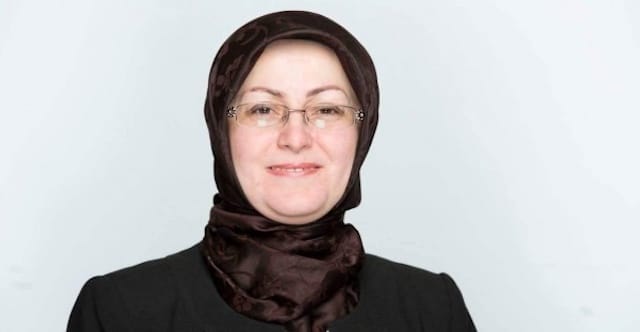
In her latest work, Mindfulness: Techniques and Practices in Islamic Psychotherapy: The Power of Muraqabah, Dr. Nazila Isgandarova provides a vital bridge between classical Islamic spirituality and contemporary mental health practices.
As the field of Islamic psychology continues to grow, Isgandarova’s contribution stands out as a sophisticated, clinically grounded, and deeply reflective guide.
The book centers on the concept of muraqabah—often translated as "watchfulness" or "vigilance."
While modern mindfulness is frequently presented in a secularized framework, Isgandarova reclaims the practice within the Islamic tradition.
As Nevin Reda, Associate Professor of Muslim Studies at Emmanuel College, notes, the book is a “groundbreaking book [that] introduces readers to the practice of muraqabah... a milestone in the emerging discipline of Islamic spiritual care and psychospiritual therapy.”
Isgandarova argues convincingly that muraqabah is not merely an ancient mystical ritual but a rigorous psychological tool that fosters God-consciousness (taqwa) and presence.
By situating mindfulness within this framework, she offers a path for Muslim clients to engage in healing that feels authentically rooted in their faith.
This sentiment is echoed by Salih Yucel of Charles Sturt University, who describes the work as a “masterpiece authored by a leading expert in the field,” praising how she “merges Islamic mindfulness practices with modern psychotherapy by connecting past holistic therapeutic knowledge with the present.”
One of the book’s greatest strengths is its structured clarity.
Isgandarova explores the nature of the human soul (nafs), the heart (qalb), and the spirit (ruh).
She draws a fascinating parallel between the "lower self" and the Freudian "id," suggesting that through the practice of muraqabah, the intellect can serve as a regulating force for destructive urges.
Thomas St. James O’Connor, Professor Emeritus at Martin Luther University, highlights the book’s utility for a broad audience, stating that it is “well done and is a great resource for scholars as well as practitioners.”
The practical utility of the book is found in its detailed techniques.
Isgandarova outlines how muraqabah can be integrated into established therapies like Cognitive Behavioral Therapy (CBT) and Dialectical Behavior Therapy (DBT).
She also breaks new ground by discussing the role of physical movement, dhikr (remembrance), and even music in achieving a state of stillness.
While the book is deeply academic, the language remains direct and purposeful.
It addresses serious mental health challenges—including anxiety, depression, and attention-deficit disorders—with a compassionate, community-oriented lens.
As Reda further observes, the book’s “innovative approach, comprehensiveness, and easy-to-read style make it a delight to read.”
As we look for ways to build more resilient communities, Mindfulness: Techniques and Practices in Islamic Psychotherapy reminds us that the tools for our healing have often been with us all along.
Dr. Isgandarova has done the community a great service by dusting off these spiritual treasures and showing us how they can be used to navigate the complexities of the modern psyche.
It is, as the reviews suggest, a "noteworthy accomplishment" for the field of spiritual care.
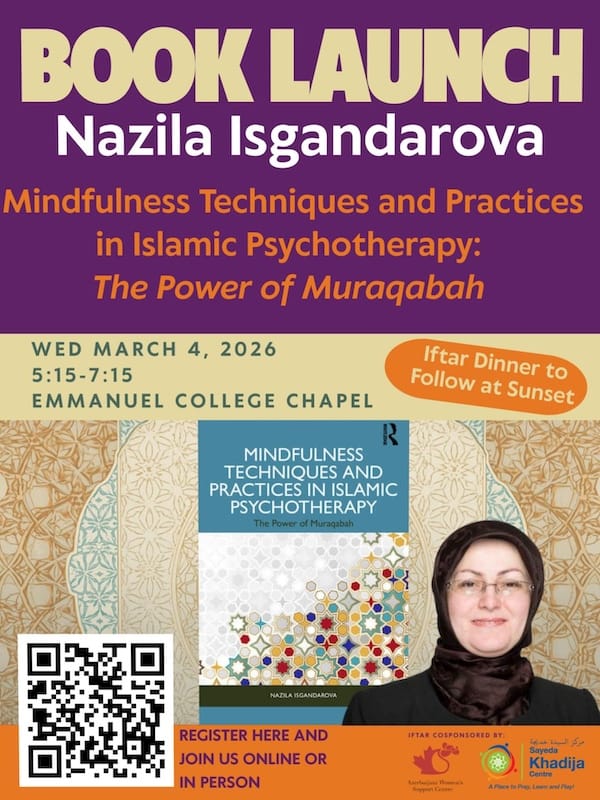
Book Launch: https://emmanuel.utoronto.ca/whats-happening/mindfulness-techniques-and-practices-in-islamic-psychotherapy-the-pow