
Beyond "Niceness" – The Call for Moral Ambition
To "enjoin what is right" is a call to moral ambition. It suggests that our presence in society should be transformative. If we are simply a community that is "well-behaved" but silent in the face of systemic injustice, are we fulfilling our mandate?
By Muneeb Nasir
In the corridors of power and the glass towers of our financial districts, there is a peculiar kind of "un-seriousness" taking hold.
It is not that people aren’t busy; they are more scheduled than ever.
It’s that this busyness is increasingly detached from the moral weight of the world’s problems.
In his BBC Reith Lectures, re-broadcast on CBC’s Ideas podcast, historian and author Rutger Bregman argues that we live in an "age of immorality."
“The moral rot runs deep across elite institutions of every stripe," Bregman says.
As I listened to his lecture on the "moral rot" within global elite institutions, I was struck by his critique of modern ambition.
We have created a world where "ambition" is almost exclusively defined by career trajectory, wealth, and status, while "idealism" is treated as a weekend hobby or a line item on a tax return.
For those of us involved in community building and philanthropy, this is a wake-up call.
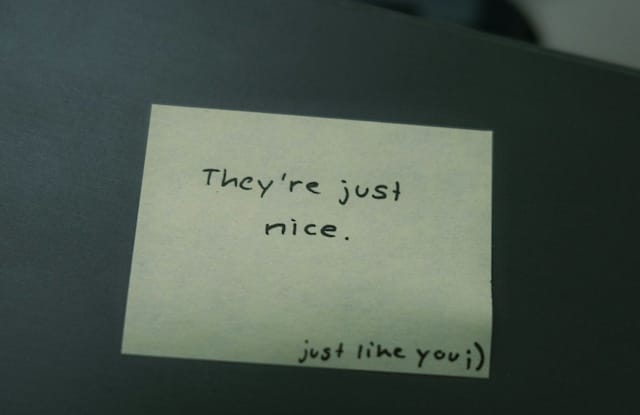
We must ask ourselves: Have we traded moral ambition for mere "niceness"?
The Trap of Passive Decency
Most of us strive to be good people.
We are polite to our family, friends and neighbors, we donate to charity, and we fulfill our professional obligations.
In our community, we often equate goodness with being "nice" or "kind."
While these are certainly virtues, they are passive.
Being "nice" often means not making waves, staying in our lane, and maintaining the status quo.
Bregman argues that the greatest challenges of our time—from the climate crisis to extreme inequality—cannot be solved by "niceness."
They require moral ambition.
This is the active, sometimes uncomfortable, pursuit of justice.
It is the decision to use our most valuable resource—our time and talent—to tackle the most pressing problems, even when it’s not the most profitable or prestigious path.
A Community of Action
In the Muslim tradition, this concept is deeply rooted in our faith.
We are often reminded of our collective responsibility to the wider world.
The Qur’an states: "[Believers], you are the best community singled out for people: you order what is right, forbid what is wrong, and believe in God." (3:110).
Notice that the "best community" is not defined by its ritual purity alone, but by its active engagement with the world.
To "order what is right" is a call to moral ambition.
It suggests that our presence in society should be transformative.
If we are simply a community that is "well-behaved" but silent in the face of systemic injustice, are we fulfilling our mandate?
The Culture of Un-Seriousness
The "un-seriousness" Bregman describes is a form of moral cowardice.
It is the cynical belief that the world is too broken to fix, so we might as well focus on our own comforts.
We see this in jobs that occupy so many talented minds—roles that add no real value to society but offer high status and higher paychecks.
When we apply this to our own local context in Canada, we see a similar trend.
We have professionalized our activism and our charity to the point where they sometimes lose their moral heart.
We focus on "awareness" instead of impact; we focus on "networking" instead of transformation.
We have become very good at the business of community, but are we still serious about the mission of community?
Reclaiming Our Ambition
Reclaiming moral ambition means being willing to be "un-serious" in the eyes of the world.
It means that a lawyer might choose to work on housing rights rather than corporate mergers.
It means that a successful entrepreneur might devote their middle years to building endowments that provide long-term stability for the vulnerable, rather than just chasing the next exit.
The First Step
The first step in this moral revolution is a shift in mindset.
We need to stop asking "How can I be successful?" and start asking "What is the most important problem I can help solve?"
Goodness is not an innate trait that we either have or don’t have; it is a muscle that we must exercise.
It requires us to move beyond the comfort of being "nice" and into the challenge of being "just."
As we look at the state of the world today, the "un-seriousness" of the elite is no longer an option for us.
We need a community that is morally ambitious—one that is, according to Rutger Bregman, ready to be a "conspiracy of decency" in a world that desperately needs it.
CBC Ideas podcast of Rutger Bregman’s lecture series: https://podcasts.apple.com/ca/podcast/ideas/id151485663?i=1000745950322