
A "Local First" Vision for Ramadan 2026
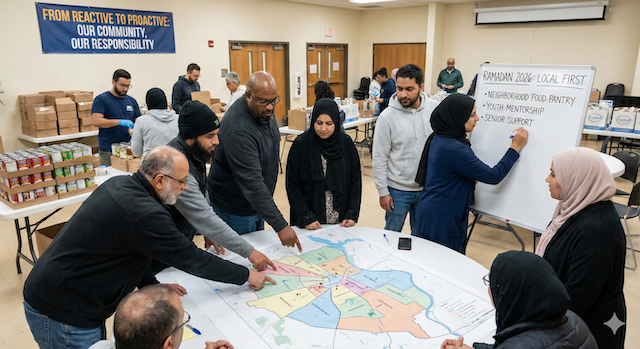
For too long, our giving has been largely reactive—responding to the most heart-wrenching images from around the world or the loudest appeal from relief agencies. This year, we are advocating for a shift toward a "Local First" model.
By Muneeb Nasir and Irshad Osman
As Ramadan 2026 begins, our community enters a period of profound spiritual and social renewal.
Beyond the personal discipline of the fast, this month represents the single largest transfer of wealth within the Muslim community.
The Zakat and Sadaqah we distribute are not merely acts of charity; they are the financial lifeblood of our institutions but also of our social safety net.
However, as the complexities of our social landscape grow, the way we give must also evolve.
For too long, our giving has been largely reactive—responding to the most heart-wrenching images from around the world or the loudest appeal from relief agencies.
This year, we are advocating for a shift toward a "Local First" model.
By prioritizing our own community and neighbourhoods and being more intentional with our institutional trust, we can build a more resilient and self-sustaining community right here in Canada.
Ask Before You Give
For many of us, the process of giving is simple: clicking on the donate button or sending an EFT to our local mosque or a well-known relief organization and trust that they will handle the rest.
This trust is a beautiful testament to our generosity and community bonds, but it must be paired with active accountability.
Zakat is a sacred trust. When we hand our zakat funds to a mosque or organization, we are essentially appointing them as our agents.
It is not only our right but our responsibility to ask upfront: "How and where exactly will these funds be distributed?"
Organizations and mosques should be eager to provide transparent answers.
They should be able to demonstrate a clear Zakat policy, verified by scholars, and show exactly where the funds will be distributed and how those funds reach the intended recipients.
By asking these questions, we don't just protect our wealth; we push our institutions toward a higher standard of excellence.
We ensure that our money isn't just sitting in a general account, but is actively moving to where it is needed most.
Mapping the Greatest Needs: From Relief to Advocacy
To give strategically, we must look beyond immediate "handouts" and address the root causes of suffering. In 2026, the needs are diverse, but they can be categorized into a hierarchy of impact:
1. The Immediate Safety Net
- Food and Housing Insecurity: With the cost of living at record highs, many families in our own jamaats (congregations) are choosing between paying rent and buying groceries.
- Vulnerable Populations: We must ensure dignified support for seniors facing isolation, persons with disabilities who lack accessible services, and refugees navigating a new society.
2. Confronting Cultural Silence
We must have the courage to fund initiatives that tackle internal community failures.
This includes supporting organizations that protect abused women—women who are too often ignored or silenced because of cultural beliefs that prioritize "family reputation" over the safety and justice mandated by our faith.
True charity involves dismantling the cultural barriers that allow such abuse to persist.
3. Funding Systemic Change
Perhaps the most overlooked area of giving is addressing/eliminating the root causes of persistent social issues. We live in a society that often fails to provide a living wage or adequate support for people with disabilities.
If we only feed the hungry without asking why they are hungry, we are merely treading water.
Strategic giving means funding the work that challenges these systems. It means supporting civic outreach and advocacy groups that lobby for a living wage, better disability benefits, and climate justice.
There are many local organizations that are engaged in these impactful and meaningful work. They may not have sponsored ads on Google or TV ads on YouTube or flashy ads on public transit to capture your attention and drive you emotionally to give.
But it is our duty to find these organizations amongst us to support so that our Zakat becomes a lifeblood for causes that strengthens the Muslim social safety net.Ramadan is a month of intentionality.
When we focus on "Local First," ask for transparency from our institutions, and fund the difficult work of advocacy and cultural change, we are doing more than just fulfilling an obligation.
We are building a community that is just, equitable, and resilient.
Let this be the year our generosity becomes a catalyst for permanent change.
*Muneeb Nasir is the Chair of the Olive Tree Foundation, a Canadian public foundation (Waqf), the Executive Director of the Cordoba Centre for Civic Engagement and Leadership, and the Managing Editor of the online Canadian Muslim Journal, IQRA.ca.
*Irshad Osman is an Imam by training and a fundraising consultant by profession who holds a Certified Fundraising Executive (CFRE) designation. He has worked with local and international charities raising funds to support human development and disaster relief work.