
Why do Canadian mosques keep losing Imams
If communities fail to protect their Imams—and treat them with fairness and dignity—this pattern of sudden turnover will continue to weaken the fabric of congregational life.
By Muneeb Nasir
Canadian mosques are facing a growing crisis—one that strikes at the heart of community trust.
In early 2024, the Ottawa Muslim Association (OMA) abruptly terminated Imam Dr. Muhammad Suliman, prompting the Canadian Council of Imams (CCI) to issue a strongly worded statement calling for ethical treatment, fair notice, and transparent communication in mosque employment decisions. Link
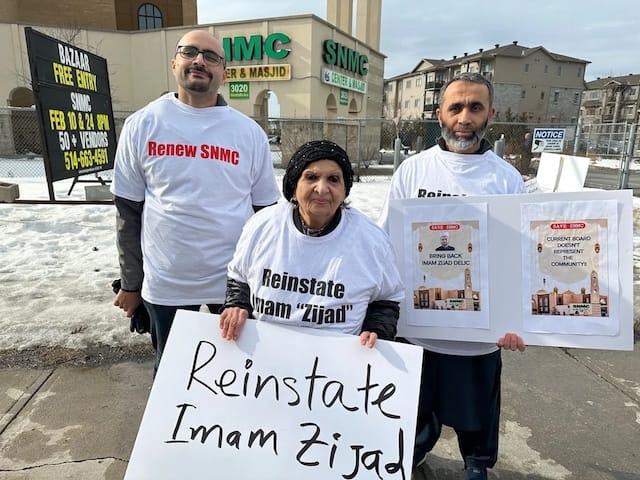
Shortly after, the South Nepean Muslim Community (SNMC) in Ottawa made headlines when Imam Dr. Zijad Delic, who had served that community for decades was also terminated.
Congregants were blindsided with little explanation — and over 3,500 signed a petition demanding his reinstatement. Link
Meanwhile, in Toronto, congregants at the TARIC Islamic Centre continue petition efforts to reinstate Shaykh Imran Ally after his abrupt removal, highlighting that this troubling pattern is not unique to Ottawa. Link

At the root is systemic mismanagement.
Many mosques lack standardized employment protocols—no clear contracts, modest notice provisions, or defined termination procedures.
Decisions are often made top-down by mosque boards, with little community consultation.
The results are unstable appointments, injured families, and congregations left without religious and spiritual continuity.
The SNMC case exemplifies this: after decades of leadership and deep community bonds, Imam Dr. Delic was removed without apparent notice or consultation, leaving congregants feeling disregarded and hurt. Link
The OMA and TARIC cases reveal similar patterns of opaque decision-making and disregard for the Imam’s integral role in the community.
Also, it is deeply troubling when other Imams and Khateebs quickly step into the pulpit after a colleague has been summarily dismissed, without first understanding the circumstances that led to the dismissal.
By bowing to mosque boards and filling the role of the terminated Imam, they betray their profession.
Where is the courage, the collegial loyalty, the ethical backbone? To remain complicit is to side with power against principle.
In a revealing discussion titled “Fired by the Masjid: The Politics Behind the Pulpit”, Shaykh Ahmad Saleem sheds light on the internal dynamics that often lead to such Imam departures.
He explains how mosque board politics can overshadow religious priorities, creating environments where Imams feel unsupported and vulnerable.
Saleem stresses that lack of transparency, accountability, and clear governance structures breeds instability, which ultimately fractures community trust.
He urges mosques to move beyond treating Imams as mere employees and instead recognize their vital role as spiritual leaders, educators, and counselors.
Transparent, respectful processes, coupled with support systems, are key to preventing burnout and fostering stability.
Professionalizing Imam-board relationships is urgent.
Mosques should establish written contracts outlining term lengths, responsibilities, evaluation metrics, and termination procedures with reasonable notice periods.
When non-renewal or dismissal is considered, private, respectful communication well before public announcements is essential to preserve trust and unity.
Broader community involvement must be standard.
Imams serve as mentors and spiritual anchors, so listening forums should be engaged in major decisions to foster communal ownership and reduce rumors and division.
Support for Imams should go beyond contracts.
Mental health resources, mentorship, peer networks, and family support are critical to preventing burnout and ensuring long-term commitment.
Well-supported Imams serve communities better and longer.
At a national level, bodies like the Canadian Council of Imams must develop and promote salary scales, ethical employment standards and governance guidelines.
Their statement regarding Dr. Suliman’s dismissal is a promising step, but more comprehensive institution-building is needed to align spiritual values with Canadian professional and legal norms.
Canadian Muslims deserve strong, stable, and spiritually grounded leadership.
If communities fail to protect their Imams—and treat them with fairness and dignity—this pattern of sudden turnover will continue to weaken the fabric of congregational life.
The cases in Ottawa—from OMA’s treatment of Dr. Suliman to SNMC’s dismissal of Dr. Delic—and the ongoing struggle at TARIC are more than isolated missteps.
They represent a systemic challenge that demands urgent reform.