
Leading with hope: Canadian Muslim youth build a national network for healing and change
Research project evolves into a youth-led, community-grounded national movement for change, empowerment, and healing
By Don McSwiney, Faculty of Social Work, University of Calgary
On Sept. 21, more than 170 participants gathered in Surrey, B.C., for the second National Symposium on Canadian Muslim Youth: Identity and Well-being, an event that advanced scholarship and community dialogue while helping build Vancouver as another regional hub in an emerging nationwide network for youth empowerment, policy advocacy and collective healing.
Hosted by the University of Calgary’s Faculty of Social Work in collaboration with the the Islamic Circle of North America (ICNA), the symposium drew youth, scholars, health professionals, policymakers and civic leaders into an urgent conversation on Muslim youth mental health, identity and belonging.
The Vancouver event was part of a national series supported by a project led by Dr. Aamir Jamal, PhD'13, whose long-term research into Muslim youth well-being is fuelling a new kind of social infrastructure: a national community of practice. The project is funded by the Social Sciences and Humanities Research Council.
“This isn’t just a symposium, it’s a movement. We’re building spaces across the country where youth, policymakers and practitioners can come together, not just to identify challenges, but to celebrate the hope, resilience and leadership that Muslim youth bring to Canada."
Dr. Aamir Jamal

Creating local hubs for national impact
Fittingly, Muslim youth are the driving force behind this series, which is being led by UCalgary students Sarah Abuali and Abdul Al-Shawwa, BSc'22, who also organized the inaugural event in the series last November in Calgary.
Abuali and Al-Shawwa worked closely with youth organizations like ICNA’s Young Muslims group to put together every aspect of the successful Vancouver symposium.
“They’re not just participating, they’re leading,” says Jamal. “These youth are making decisions, inviting speakers, running panels. I always tell them, ‘I’m just your assistant!’”
This localized leadership is key to Jamal’s broader vision. “Each city has a unique context, and these gatherings help surface regional nuances while contributing to a shared national dialogue,” he says.
In Vancouver, for example, the event saw heightened engagement from elected officials, including MPs and MLAs from across the political spectrum. A letter of support from B.C. Premier David Eby praised the symposium’s contributions to diversity and inclusion.
Bridging policy and practice
An opening keynote address by former journalist Amira Elghawaby, Canada’s Special Representative on Combatting Islamophobia, set the tone for the event. In her remarks, Elghawaby emphasized the importance of tackling systemic barriers, fostering equitable institutions and amplifying the voices of Muslim youth in shaping Canada’s future.
These themes resonated throughout the day, including a multi-sector policy panel moderated by Haroon Ghaffar, director of Media and Community Relations for the Province of British Columbia. The wide-ranging discussion included elected officials, civic leaders and grassroots advocates including Amna Shah, Sukh Dhaliwal, Bryan Tepper (MLA for Surrey-Panorama), Linda Annis (Surrey city councillor and mayoral candidate), Muhammad Asad Gondal (president of the BC Muslim Association) and political commentator Haroon Khan.
Their conversation explored how Muslim youth perspectives can help shape equitable, inclusive policy frameworks, particularly around mental health, education and anti-racism.
Youth participants at the event were not passive observers; they directly challenged panellists with questions about systemic barriers, political accountability and how to embed Muslim voices into policymaking structures.
“This is where change really begins,” says Jamal. “When youth are at the table with decision makers, asking hard questions and offering ideas, that’s when you start to see systems shift.”
The presence of these high-level leaders also signalled these conversations are no longer niche and are becoming part of a broader reckoning with Canada’s social fabric and future. By embedding youth-led research and lived experience into these dialogues, the symposium is seeding a more responsive and inclusive policy environment.

Youth leading the conversation
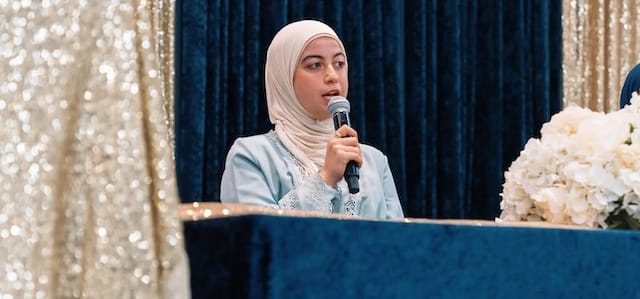
A highlight of the Vancouver symposium was a youth-led panel moderated by ICNA youth co-ordinator Daniyal Usmani. Young leaders spoke candidly about their experiences navigating cultural identity, Islamophobia and mental health, which generated powerful insights that resonated throughout the event.
“Muslim youth are living in a unique moment,” says Jamal. “They’re navigating global conflicts, rising Islamophobia and systemic barriers. At the same time, they’re incredibly future focused. Our study found that their sense of belonging to Canada was actually stronger than the national average.
"They are contributing to this country not only through their struggles, but through their strength.”
This tension between pain and pride is what the symposium series seeks to illuminate. “We’re not just documenting suffering,” Jamal says. “We’re advocating for holistic approaches to mental health that include Islamic spirituality, and we’re building models of youth engagement that are scalable across the country.”
A vision for the future
Jamal and the Muslim Youth organizers are already working with groups to host similar events in Toronto and Manitoba, with other locations already in the planning stages.
As each city hosts its own event, the ripple effects are tangible: stronger local organizations, deeper connections between sectors, and youth who see themselves not as subjects of research, but as architects of change.
In the future, Jamal envisions the creation of a central hub to support this work, a national centre for Muslim youth mental health, based out of UCalgary's Faculty of Social Work.
“What we’re witnessing is really the birth of a national movement, one that’s being built from the ground up by the very people it’s meant to serve,” says Jamal.
(Reposted with permission from University of Calgary. Original article: https://www.ucalgary.ca/news/leading-hope-canadian-muslim-youth-build-national-network-healing-and-change)