
Islamic History Month Reflections: Guyanese Roots, Canadian Muslim Identity
Our example shows how faith and culture can flourish in a new context - an important lesson for our diverse community seeking to carve out a Canadian Muslim identity.
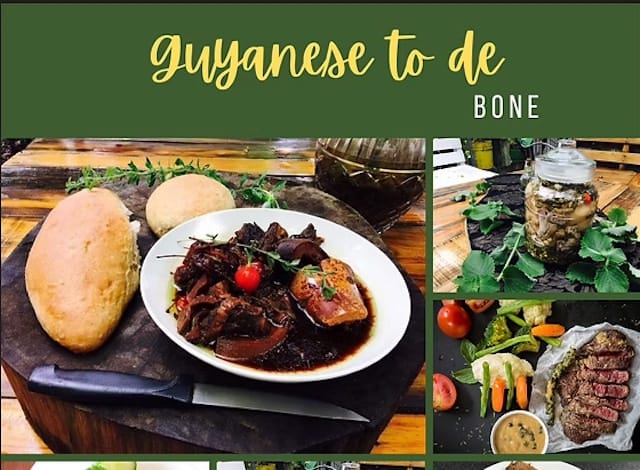
By Muneeb Nasir
As we mark Islamic History Month in Canada, I find myself reflecting on my own journey as an immigrant to Canada and on how much our roots shape who we are.
History is not only the story of empires and rulers—it is also the story of families like mine, who carried traditions, memories, and ways of life across oceans, and planted them here in Canada.
As a Canadian Muslim with Guyanese roots, I often see our community through various lenses.
People sometimes assume Guyanese Muslims in the Greater Toronto Area are a large group because of our visible leadership, our community organizing, and our role in founding mosques and institutions.
In truth, we are a small community within the wider Canadian Muslim mosaic.
Our presence and visibility don’t come from numbers, but from the way we have adapted quickly, embraced multiculturalism, and carried our heritage forward into a new country.
For me, that heritage lives most vividly in food.
In Guyana, food is not just sustenance—it is a living archive.
I grew up with dishes that carried history in every bite: pepperpot, dhal puri, curry, metemgee.
These were not just meals, but memories of survival and resilience.
They told the story of Indigenous peoples who first worked with cassava and cassareep, of enslaved Africans who created pepperpot and metemgee from meagre rations, of Indian indentured labourers who introduced curries, roti, and dhal, and of Portuguese and Chinese migrants who added their own flavours.
Over time, all of these influences blended into a cuisine that was both creole and uniquely Guyanese.
Here in Canada, when I eat these foods, I feel deeply connected to that history.
Tasting pepperpot at year end, eating vermicelli/sawine at Eid, and sharing curry and roti at family get-togethers is more than a habit—it is an act of remembering.
Food reminds me that history is not just something recorded in books, but something we live, share, and pass down at the table.
I know that some in the wider Muslim community sometimes see Guyanese Muslims as having lost certain cultural markers—like language or dress—or as being more “Westernized.”
But I see our adaptability as a strength.
It has allowed us to build institutions, to thrive, and to contribute meaningfully in Canada while staying rooted in our faith and our unique heritage.
The Muslim community here is beautifully diverse.
Each of us, very much like me, carries a personal history of migration, struggle, and adaptation.
Together, these stories form a larger Canadian Muslim narrative, where every root contributes to the strength of the whole tree.
I think often about Guyana today, now the world’s fastest-growing economy because of the discovery of oil.
That rapid change brings opportunities, but also the danger of cultural erasure and of forgetting the resilience that shaped us.
For me, holding on to the memory of our food—our pepperpot, our curries, our roti, our potato ball, our bake and saltfish, our metemgee—is one way to stay anchored in that history.
These dishes carry the stories of our ancestors’ survival, their creativity, and their will to endure.
This Islamic History Month, I am reminded that my own roots are part of the larger story of Muslims in Canada.
My food, my memories, my heritage—they are not just personal, but part of the living history of our community.
As Canadian Muslims, we are called to express these parts of our identity — not to recreate our ethnic or regional communities here, nor to separate ourselves from the wider Muslim community — but to honour our past while helping to shape a future in which our Islamic faith and diverse cultures continue to thrive in Canada.