
How a Displaced Palestinian Scholar Shaped Montreal’s Muslim Community
He was among the first Palestinian scholars to teach at McGill, helped transform a church basement into a sanctuary, and demonstrated how scholarship could strengthen civic and communal life.
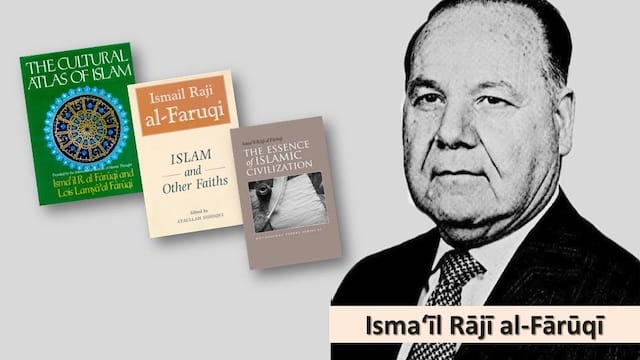
In 1958, Ismaʿil Raji al-Faruqi arrived in Montreal, a Palestinian scholar uprooted by the upheaval of 1948.
Invited by Professor Wilfred Cantwell Smith, he joined McGill University’s newly founded Institute of Islamic Studies—the first program of its kind in North America—teaching comparative religion and Islamic thought.
At the same time, Muslim families in Montreal were gathering informally, often at the home of Habibullah Khan.
These early meetings eventually led to the creation of the Islamic Centre of Montreal, incorporated in 1958 with Khan as its first president.
Al-Faruqi quickly became a guiding force for the fledgling community, providing both intellectual depth and organizational vision.
By 1960, he had emerged as the de facto president of the Muslim Community of Greater Montreal.
Without a mosque, the community relied on an unlikely ally: Mount Royal United Church.
With Smith’s support, the church opened its doors for Muslim prayers and community events—a remarkable act of interfaith solidarity.
Under al-Faruqi’s guidance, this temporary space became a meaningful spiritual and social home.
Though his stay lasted just three years, al-Faruqi left a lasting mark.
He was among the first Palestinian scholars to teach at McGill, helped transform a church basement into a sanctuary, and demonstrated how scholarship could strengthen civic and communal life.
Today, Montreal’s Muslim presence thrives—from neighborhood mosques to interfaith initiatives—but its roots trace back to those early gatherings led by a determined scholar blending knowledge with belonging.
A Life of Scholarship and Service
Born in Jaffa in 1921, Ismaʿil al-Faruqi grew up in a religiously influential family. After earning a bachelor’s degree in the humanities from the American University of Beirut in 1942, he served under the British Mandate in Jerusalem and became the district governor of Galilee in 1945.
Following the creation of Israel in 1948, he migrated to Beirut, then pursued graduate studies in the United States, earning multiple philosophy degrees, including a Ph.D. from Indiana University in 1952.
From 1954 to 1958, he deepened his Islamic scholarship at al-Azhar University in Cairo.
At McGill (1959–1961), he taught alongside scholars like Fazlur Rahman and explored Christianity and Judaism, forging friendships and missions that would influence Islamic studies globally.
His academic career spanned institutions in Pakistan and the United States, culminating in a long tenure at Temple University in Philadelphia.
Al-Faruqi was also a leader in interfaith work, founding the Islamic Studies Group in the American Academy of Religion, serving as vice-president of the Inter-Religious Peace Colloquium, and presiding over the American Islamic College in Chicago.
Tragically, in 1986, he and his wife, Lois Lamya al-Faruqi, were murdered in their home. Yet his legacy endures through his scholarship, his community-building efforts, and the many ways he bridged faith, knowledge, and civic life.
Sources: