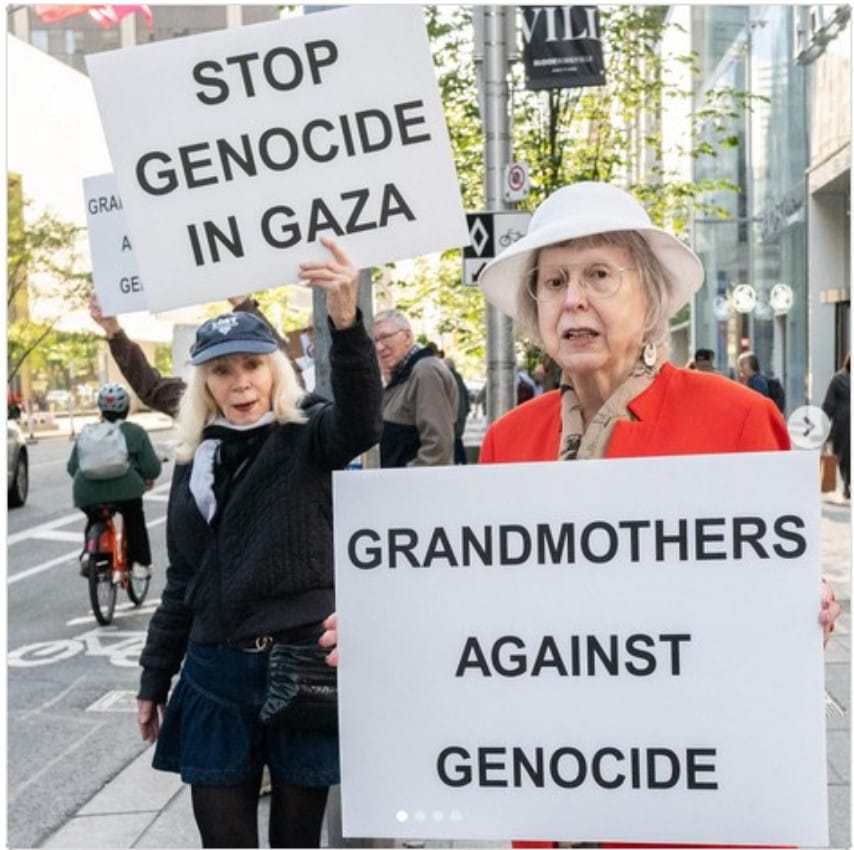
Grandmothers Against Genocide: Canadian grandmothers lead silent vigils for Gaza
Grandmothers Against Genocide emphasizes that their goal isn't a confrontational protest, but rather peaceful visibility and a moral appeal.
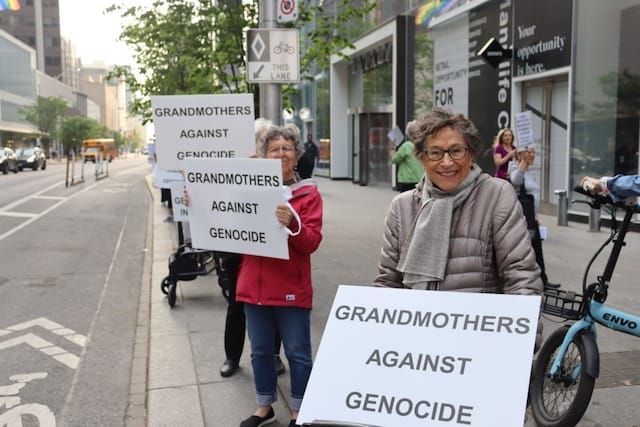
A powerful grassroots movement, Grandmothers Against Genocide, has emerged across Canada, with grandmothers leading weekly, silent vigils in cities nationwide.
The movement began in mid-May in Toronto when one grandmother, deeply affected by reports of genocide and humanitarian crises in Gaza, arrived at Yonge and Bloor.
With her walker and a sign reading "Grandmothers Against Genocide," her peaceful presence quickly drew others.
Soon, older women and supporters of all ages joined her for weekly silent protests.
These vigils, often held in busy downtown areas, are dignified acts of solidarity with displaced families and a protest against the genocide and suffering in Gaza.
As one founder explained, "As a grandmother, I needed to help." The group offers a non-partisan presence, bearing witness to the immense suffering.
While the original Toronto gathering at Yonge and Bloor was spearheaded by volunteers and supported by community members, the movement has rapidly spread.
Vancouver now holds similar vigils, expressing solidarity through quiet public presence, often aligning with broader Palestinian solidarity efforts.
Other Canadian cities are also starting their own grandmother-led vigils.
The vigils evoke historical traditions of political witness, such as Argentina's Abuelas de Plaza de Mayo, where grandmothers famously demanded justice.
Grandmothers Against Genocide emphasizes that their goal isn't a confrontational protest, but rather peaceful visibility and a moral appeal.
They aim for a silent stand against the suffering of mothers and children abroad.
Participants typically hold signs and sometimes wear name tags that identify them as grandmothers.
The events last about an hour, maintaining a solemn and inclusive atmosphere with no chants or speeches.
Though small, the movement is profoundly poignant, drawing attention through the symbolic weight of older women gathering weekly in public spaces.
Organizers hope their visible solidarity will amplify calls for humanitarian action, encourage engagement from elected officials, and raise awareness about family separation caused by conflict.