
Faith in Action: Why Climate Justice Is Now a Spiritual Duty
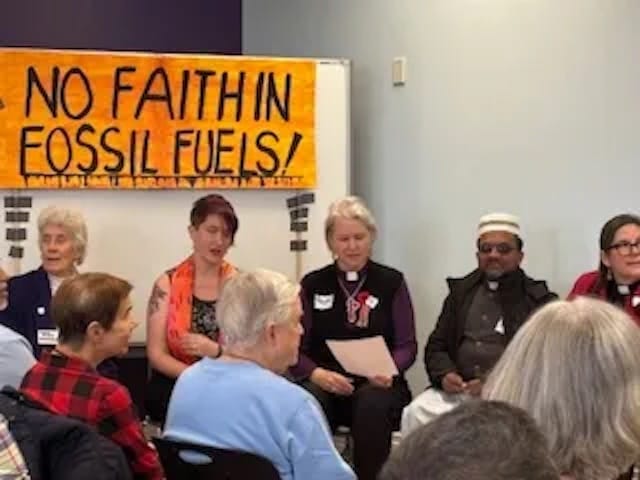
An urgent call for moral courage and immediate climate action echoed through Toronto on November 10, 2025 as faith leaders and community members gathered for a powerful interfaith service.

An urgent call for moral courage and immediate climate action echoed through Toronto on November 10, 2025 as faith leaders and community members gathered for a powerful interfaith service.
The event, titled “No Faith in Fossil Fuels,” brought together diverse spiritual traditions to affirm a shared duty to protect the Earth and advocate for a just transition away from destructive energy sources.
The gathering at the Ralph Thornton Community Centre was more than a service; it was a profound act of public witness.
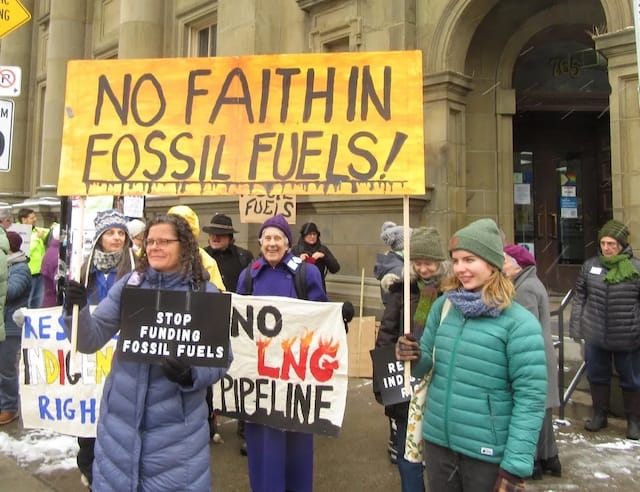
It culminated in a silent walk to the constituency office of Minister of Environment and Climate Change Julie Dabrusin, where a letter signed by faith leaders from across Canada was delivered.
This letter urged the federal government to demonstrate stronger global leadership at upcoming international talks (COP30) and beyond.
The Moral Imperative of Stewardship
Organizers intentionally framed the service as a response to a moral crisis, arguing that climate change is not merely an environmental challenge but a direct test of our spiritual integrity.
Participants engaged in prayer, reflection, and mutual affirmation, acknowledging a profound, shared responsibility to safeguard creation and support the communities most vulnerable to environmental harm.
Speaking at the heart of the service, Imam Irshad Osman offered a clear, compelling articulation of the Islamic perspective, grounding his remarks in core principles of stewardship (Amanah), mercy (Rahmah), and accountability (Hisab).
He emphasized that the Earth is a sacred trust (Amanah) bequeathed to humanity, and believers are fundamentally obligated to protect it, not just for themselves but for future generations.
For the Imam, climate inaction is not a passive policy oversight; it is an active violation of justice (Adl).
He stressed that the resulting climate crisis disproportionately harms the poor, racialized communities, and those who have contributed the least to global emissions.
To neglect the planet is to neglect the rights of the weak.
Connecting Prayer to Public Responsibility
Imam Irshad skillfully moved the conversation beyond abstract theology, linking personal faith directly to public responsibility.
He urged worshippers to view their advocacy for climate justice as a continuous extension of their daily prayers, charitable acts, and spiritual discipline.
He argued that a spiritual commitment to moderation and responsibility is fundamentally contradicted by overconsumption, the waste of energy, and continued financial investment in fossil fuels.
Care for the climate, he asserted, is an expression of gratitude to the Creator for the sustenance provided by the Earth.
Wasting that bounty, or profiting from its destruction, stands in direct opposition to the spiritual discipline preached by Islam and all major faiths.
From Words to Organized Witness
A central and recurring theme in the Imam's address was the need to transition “from words to witness.”
This means moving beyond good intentions and individual piety to organized, collective action within congregations and broader communities.
He encouraged attendees to leverage their institutional power: pushing faith-based organizations to divest their funds from the fossil fuel sector, significantly reducing their own collective carbon footprints, and actively supporting public policies that prioritize renewable energy, robust transition support for fossil fuel workers, and tangible protection for frontline communities.
Imam Irshad also highlighted the essential role of interfaith collaboration.
Climate breakdown, he noted, does not distinguish between religious or national boundaries.
Therefore, the response must be a unified moral voice—one that transcends denominations and sends a powerful signal to political leaders that people of faith are united in standing for the common good.
He welcomed the presence of representatives from Christian, Jewish, and other communities, underscoring that our shared humanity and the shared crisis demand solidarity.
A Commitment to Sustained Courage
The service’s culminating moment—the walk and the delivery of the letter—symbolized this very act of “putting feet to prayers.”
The letter was unequivocal, calling on the federal government to:
- Immediately cease approving new fossil fuel projects.
- Phase out existing production on a timeline based on climate science.
- Make significant investments in a fair and equitable transition for all workers and communities.
For Imam Irshad Osman and the hundreds who attended, this day was framed not as an ending but as an important start.
They left with a renewed, shared commitment to bring the moral message of “No Faith in Fossil Fuels” back to their congregations, to deepen educational efforts on faith and climate, and to relentlessly press public officials to act with the moral clarity and courage the climate emergency urgently demands.
The enduring message is that true faith requires decisive, collective action.
For more information on the event and interfaith climate initiatives, visit faithandclimate.ca.