
Canadians mark 30th anniversary of Srebrenica genocide, vow "Never Again"

Last weekend, Canadians joined the international community in observing the solemn 30th anniversary of the Srebrenica Genocide, a horrific event in which over 8,372 Bosnian Muslim men and boys were systematically murdered by Bosnian Serb forces on July 10-11, 1995.
Commemorative events and statements from various levels of government and human rights organizations underscored a commitment to remembrance, justice, and the prevention of future atrocities.
The Canadian government, through a statement from Global Affairs Canada, reaffirmed its commitment to remembering the more than 8,000 lives lost and the displacement of over 20,000 women and children.
"As we mark this somber occasion, we welcome the official recognition of this day as the first International Day of Reflection and Commemoration of the 1995 Genocide in Srebrenica, following a resolution approved by the UN General Assembly on May 23, 2024," read the statement, which was released by the Honourable Anita Anand, Minister of Foreign Affairs, on July 11, 2025.
Canada also highlighted its role as a co-sponsor of the UN resolution. It reiterated its support for the 1995 Dayton Peace Agreement and the territorial integrity of Bosnia and Herzegovina as a multiethnic state.

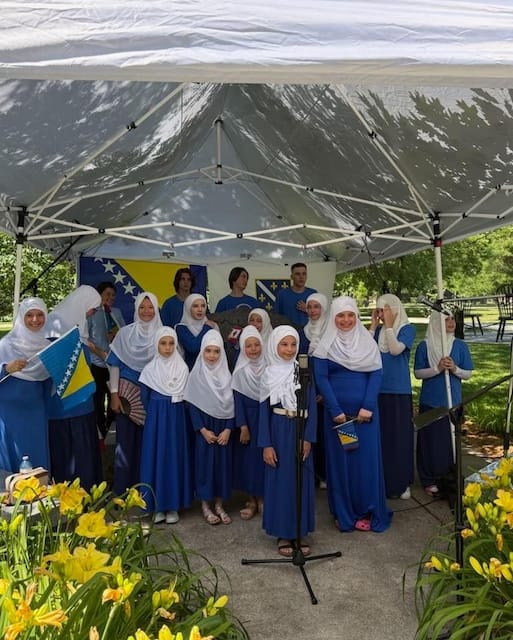
In Windsor, Ontario, Mayor Drew Dilkens joined members of the Bosnian-Canadian community at Jackson Park to mark the anniversary.
"It was an honour to join with members of our Bosnian-Canadian community at Jackson Park to mark the solemn 30th Anniversary of the Srebrenica Genocide," Mayor Dilkens stated.
He emphasized the importance of honouring and remembering the lives lost and the more than 30,000 civilians forcibly displaced.
"To the people of Srebrenica, and the thousands living in Windsor and Canada today, we honour your sacrifices [and] will continue to honour your loved ones."
Windsor has a history of recognizing this tragic event, with Mayor Dilkens having previously issued proclamations for "Srebrenica Genocide Remembrance Day."
British Columbia also formally recognized the day, with a proclamation declaring July 11, 2025, as "Srebrenica Remembrance Day" in the province.
The proclamation noted that 2025 is the 30th anniversary and an opportunity "to remember and honour those who lost their lives to a brutal campaign of terror, force and ethnic cleansing."
Amnesty International Canada joined in the remembrance, issuing a statement that called the 30th anniversary a "painful reminder from history."
The organization highlighted that while many perpetrators have been brought to justice, nearly 1,000 people presumed killed in Srebrenica are still missing, leaving families without closure.
Amnesty International's Deputy Regional Director for Europe, Dinushika Dissanayake, noted that "The denial of genocide is not only a profound insult to victims and families, it is also a rejection of the definitive rulings by international courts that established beyond doubt that the acts committed in Srebrenica constituted genocide."

Canadians across the country were reminded of the enduring trauma faced by survivors and the importance of countering genocide denial.
CBC News featured coverage of Vancouver's Bosnian community marking the anniversary, reporting that survivors continue to grapple with the deep-seated trauma of the atrocity, described as the deadliest on European soil since World War II.
The collective sentiment echoed across Canada was a resolute "Never Again," emphasizing the need for continued vigilance against hatred, division, and the denial of historical atrocities.

Background to the Srebrenica massacre
In July 1995, units of the Bosnian Serb Army (‘VRS’) attacked Srebrenica, Bosnia and Herzegovina, which was a designated UN “safe area”. On 10-11 July 1995, more than 8,000 Bosnian Muslim men and boys were taken prisoner and subsequently killed by the Bosnian Serb Army, despite the presence of UN peacekeepers.
In 2007, the International Court of Justice ruled that the Srebrenica massacre was a genocide. While the bodies of more than 7,000 victims have been exhumed, identified, and buried, more than 1,000 people are still missing or unidentified.
Despite high-level prosecutions, including those of Ratko Mladic and Radovan Karadzic, a significant backlog of cases remains pending before domestic courts in Bosnia and Herzegovina.
In May 2024, the UN General Assembly designated 11 July as the International Day of Reflection and Commemoration of the 1995 Genocide in Srebrenica.